SAVING THE SALT CREEK TIGER BEETLE
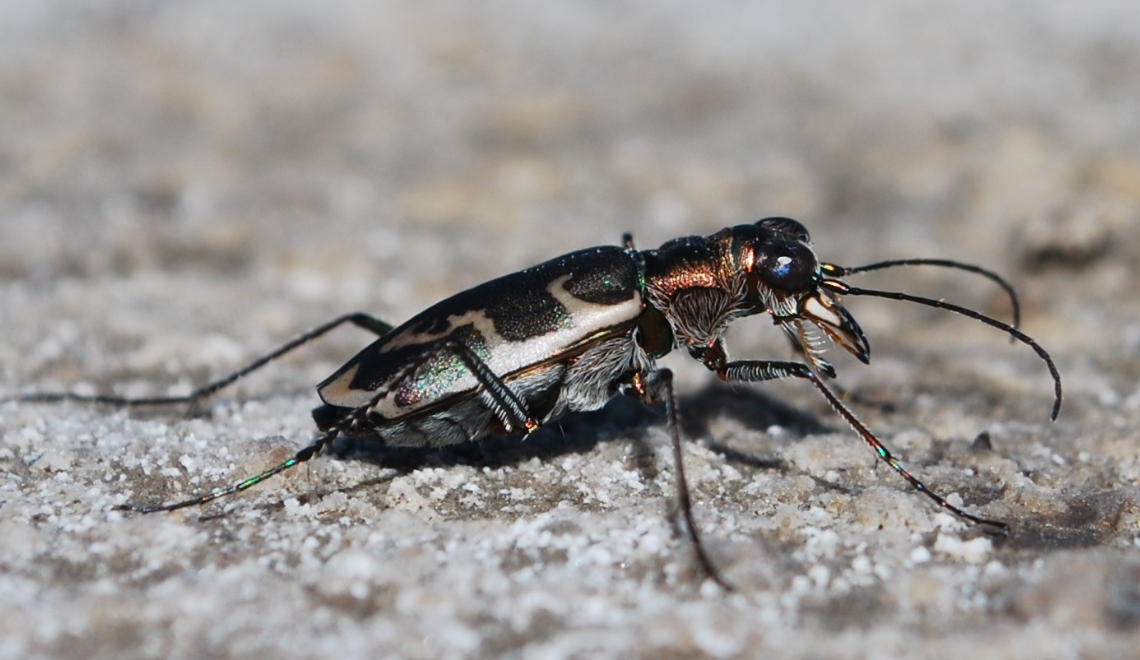
Salt Creek tiger beetles live mostly underground, periodically emerging from their burrows to await passing invertebrate victims — sometimes nearly as big as themselves — and seize them with theirmassive mandibles, later dragging them down to devour. But while these beetles are one of the most formidable predators of the insect world, they're also one of the rarest insects in North America, adapted for the highly specific habitat conditions of eastern Nebraska's saline wetlands — which are being demolished by development nearly as fast as the tiger beetles consume their prey.
Only a few hundred individual beetles remain, in less than 10 percent of their original range. Tiger beetles arean indicator species for the health of their unique saline wetland habitat, which is also home to hundreds of bird species, including piping plovers and peregrine falcons. And the beetles serve as natural water filters and flood-control agents.
To save Salt Creek tiger beetles, listed as endangered in 2005, the Center is working to earn the best possible protection for the places they live. Biologists have identified more than 36,000 acres that must receive federal protection if the insects are to survive and recover — but in 2010, the U.S. Fish and Wildlife Service set aside just 1,933 acres as critical habitat. We and allies sued the next year, and in June 2011 we reached a settlement forcing the Service to consider increasing protections for these beetles' unique wetland home. Frustratingly, in 2013 the agency proposed a new, even smaller designation of only 1,110 acres.
Check out our press releases to learn more about our actions for Salt Creek tiger beetles.