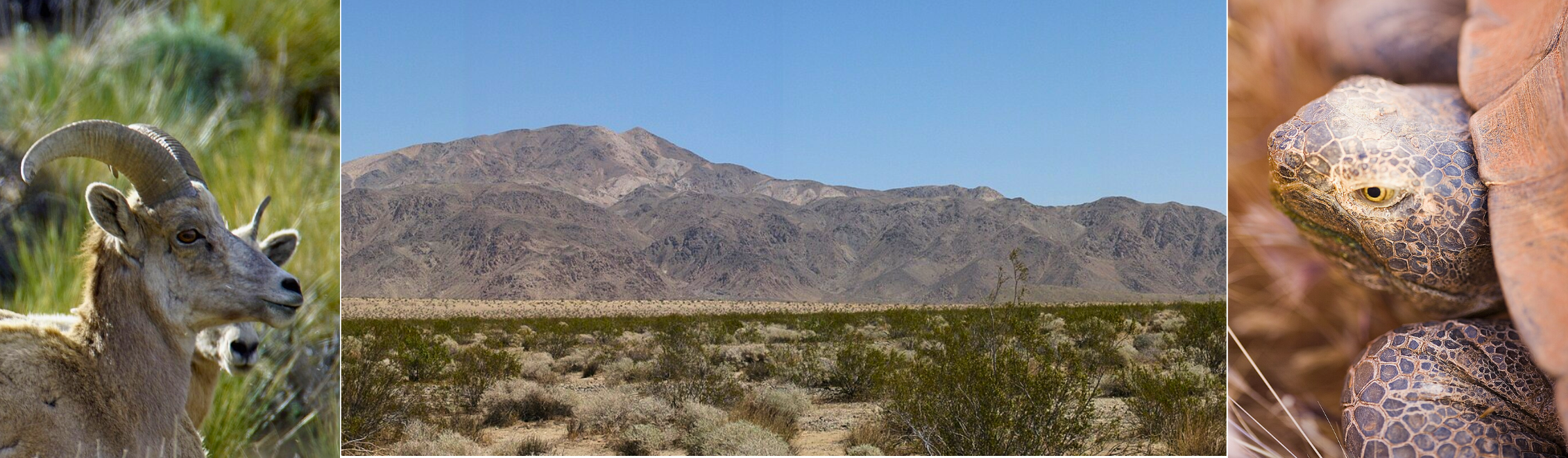
The Music Valley Mine
Southern California’s Music Valley is a ruggedly striking, geologically unique basin in the Pinto Mountains of Riverside and San Bernardino counties alongside Joshua Tree National Park. The valley has high biological and scenic value and is home to vulnerable plant and animal species. This place is also known to hold deposits of heavy rare earth elements — a group of scarce, high-density metals commonly used in things like electronics, magnets, and military equipment.
Now the valley, its wildlife, and surrounding landscapes are under threat from a potential mine called the Music Valley Project.
The mine’s proponent, an Australian company, has already staked and acquired more than 1,000 claims covering more than 21,000 acres of the area for exclusive rights to explore and extract heavy rare earth elements.
What’s at Stake
The Music Valley Project would sit right next to Joshua Tree National Park and the Pinto Mountains Wilderness and would include land within the Twentynine Palms city limits. The mine would be visible from the park and the town, spoiling the natural beauty of an area that residents enjoy and local tourism relies on.
Music Valley itself is identified as a conservation priority in California’s deserts. Recognizing the land’s unique importance, the U.S. Bureau of Land Management designates it as an “area of critical environmental concern” and places it within the National Conservation Lands of the California Desert. Mining in this area would directly affect critical habitat for federally protected Mojave desert tortoises and could harm many other sensitive species living here, including desert bighorn sheep, LeConte’s thrashers, Mojave fringe-toed lizards, Alverson’s foxtail cactus, and Wright’s beebrush. The area also provides connectivity throughout the larger landscape and the necessary space for wildlife to move across the desert and adapt to climate change.
Mining exploration and operations in Music Valley would destroy fragile, threatened desert ecosystems in a region already being fragmented and degraded by increasing development pressures. And the type of mining proposed, heavy rare earth mining, uses large amounts of water and energy, threatens groundwater quality, and generates toxic waste — all while worsening traffic, dust, and light pollution.
Fighting Back
Protecting Music Valley won’t be easy.
The potential project’s announcement came at a time when environmental review and public engagement for mining are in jeopardy. Federal and state policies are increasingly weakening enforcement of laws (like the National Environmental Policy Act and California Environmental Quality Act) that require thorough regulatory oversight and public scrutiny.
Still, the U.S. Bureau of Land Management, San Bernardino County, and Riverside County would be legally required to undertake adequate reviews that address the Music Valley Project’s environmental impacts and allow for full transparency and engagement with affected communities. Twentynine Palms also has a role, since the city has jurisdiction over its streets — including the only viable roads going in and out of Music Valley.
Local communities and environmental groups, including the Center, are working to safeguard this valley’s fragile desert landscapes, wildlife, and resources.
And we’re monitoring other mining projects and proposals in the California deserts — pushed by the Music Valley Project’s proponent and other companies — to help defend the conservation values of all these public lands and the species that depend on them.


