
For Immediate Release, December 16, 2025
|
Contact: |
Chris R. Shepherd, [email protected] |
U.S. Protections Sought for Imperiled Malaysian Purple-Femur Tarantula
Illegal International Exotic Pet Trade Threatens Spiders
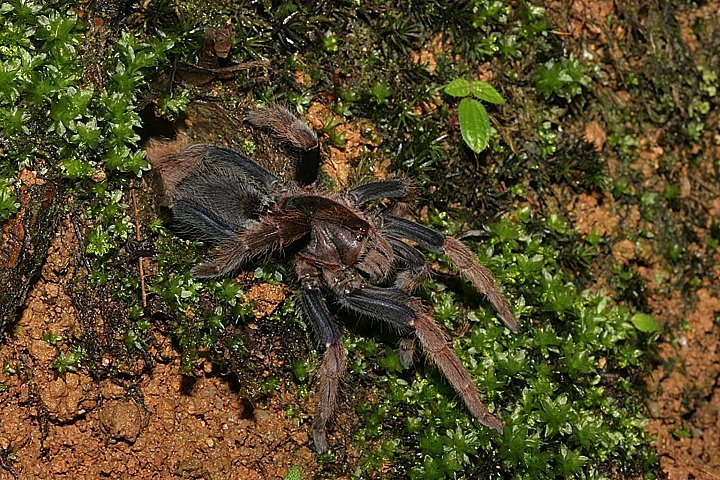
WASHINGTON— The Center for Biological Diversity formally petitioned the U.S. Fish and Wildlife Service today to list the Malaysian purple-femur tarantula as endangered under the Endangered Species Act. The tarantula’s population decline is driven primarily by illegal trade for the pet market.
“It’s unacceptable that international pet demand is robbing Malaysia of irreplaceable wildlife like this stunning tarantula,” said Chris R. Shepherd, Ph.D., senior conservation advocate at the Center for Biological Diversity. “To stop extinction, countries like the United States must work with Malaysia to strengthen enforcement, close trade loopholes and reduce consumer demand. We can’t let Malaysia’s extraordinary biodiversity be lost to frivolous illegal wildlife trade.”
This striking spider occupies only one small hilly region in West Malaysia called Fraser’s Hill. Despite Malaysia’s ban on collection and export, the tarantula continues to surface in international markets. That includes the United States, where demand from the exotic pet trade is strong.
Immediate U.S. action would stem illegal imports, protect remaining populations and prevent the extinction of this unique Southeast Asian spider.
The Malaysian purple-femur tarantula (Coremiocnemis hoggi) constructs burrows sealed with silk webbing in steep, shaded areas of montane tropical rainforest. Poachers dig the spiders out of these easy-to-identify burrows for trade. The tarantula’s tiny, fragile habitat is only about 10 square miles.
Global trade in tarantulas remains largely unregulated, leaving many species at risk. The United States is a major importer of tarantulas and other exotic species, driving demand that fuels illegal collection and trafficking. According to a recent Center report, the country imports on average more than 90 million live pet trade animals each year, about 30% of which are captured directly from the wild.
Collecting and exporting purple-femur tarantulas is illegal in Malaysia, but enforcement challenges and weak global oversight allow trade to persist. Collecting tarantulas for the pet industry is recognized as a significant threat to several tarantula species worldwide, underscoring the urgent need for stronger international cooperation and regulation, including under the Convention on International Trade in Endangered Species. If the government of Malaysia listed the tarantula under a CITES provision called Appendix III, importing countries like the United States would be obligated to regulate, monitor and report international trade in the species.
“Purple-femur tarantulas need U.S. protections now, but Malaysia and other importing countries also need to take more action to stop trade,” said Shepherd. “The exotic pet market is international, and it will take a global effort to keep this amazing tarantula safe at home on its hill in Malaysia.”
The Center for Biological Diversity is a national, nonprofit conservation organization with more than 1.8 million members and online activists dedicated to the protection of endangered species and wild places.
