
For Immediate Release, September 29, 2026
|
Contact: |
Russ McSpadden, Center for Biological Diversity, (928) 310-6713, [email protected] |
Trump Administration Sued to Stop Mine Expansion in Arizona’s Patagonia Mountains
TUCSON, Ariz.—The Center for Biological Diversity and Patagonia Area Resource Alliance sued the Trump administration today over its Sept. 2 approval of the expansion of South32’s massive Hermosa mine onto federal public lands in southern Arizona.
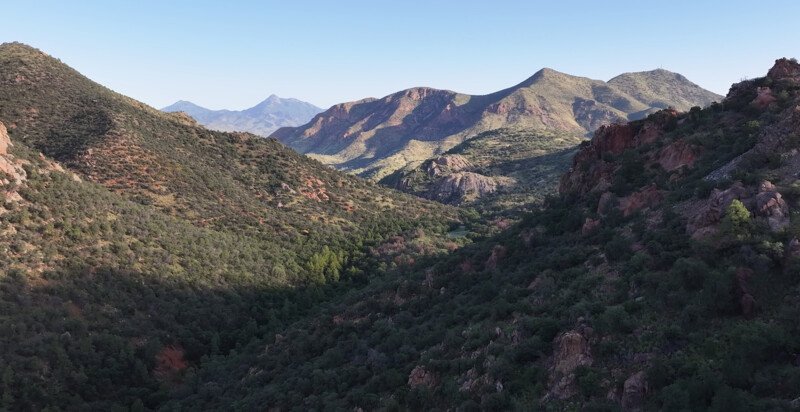
The heavy metals mine is located in the Patagonia Mountains, one of Arizona’s most biologically rich and ecologically important mountain ranges.
“Federal agencies that are supposed to protect public lands and endangered animals are planning to sacrifice one of the most important wildlife corridors in the Southwest,” said Russ McSpadden, Southwest conservation advocate at the Center. “Once these mountains are carved up and their aquifers depleted, there’s no putting them back together. The Patagonia Mountains are worth far more as a thriving ecosystem than they’ll ever be worth to a giant mining company.”
Today’s lawsuit, filed in the U.S. District Court for the District of Arizona, challenges approvals by the U.S. Forest Service and U.S. Fish and Wildlife Service that would expand industrial mining activities across more than 52,000 acres of public land in the Coronado National Forest for 83 years.
The lawsuit says the agencies violated the Endangered Species Act by failing to properly evaluate and protect listed species and their designated critical habitat. The agencies approved the project despite acknowledging that it is likely to harm numerous endangered and threatened animals and plants.
The lawsuit also says the Forest Service violated the National Environmental Policy Act by failing to provide an adequate analysis of the project’s threats, including its effects on groundwater and other public resources.
The project would destroy and fragment wildlife habitat, cause massive water drawdowns in the Patagonia Mountains, bury hundreds of acres beneath mine waste and carve new roads and powerlines through pristine public lands. The federal agencies rushed their review of potential environmental threats through the FAST-41 permitting process.
“Communities across the country should understand: this is just the beginning,” said Anna Darian of Patagonia Area Resource Alliance. “Hermosa may be the first hardrock mining project approved under FAST-41, but it is being held up as a model for what comes next. The long-term effects of weakening or waiving environmental protections could have irreversible consequences for frontline communities like ours.”
The Patagonia Mountains are a refuge for endangered jaguars and ocelots moving between northern Mexico and southern Arizona. According to the agencies’ own assessments, the expansion project would threaten the only corridor for roughly 120 miles where the cats can cross the U.S.-Mexico border.
The Patagonia Mountains also contain habitat that is vital for threatened Mexican spotted owls and western yellow-billed cuckoos. They harbor some of the most important remaining populations of several other imperiled plants and animals, including Bartram’s stonecrop, beardless chinchweed, Gila topminnow and northern Mexican gartersnakes. The project area contains 16% of all known remaining Bartram’s stonecrop and one of only nine remaining populations of beardless chinchweed in the U.S.
The mine expansion would bring industrial development deep into the public forest, including a 225-acre tailings facility capable of holding up to 38 million tons of mining waste, a 7.6-mile permanent access road, 7.2 miles of new power transmission lines, up to hundreds of exploratory drill holes and six groundwater wells. Groundwater pumping would draw down the water table by as much as 250 feet and may reduce or even eliminate flows in some seeps and springs that provide life-giving waters to wildlife.
The Center for Biological Diversity is a national, nonprofit conservation organization with more than 1.8 million members and online activists dedicated to the protection of endangered species and wild places.
Patagonia Area Resource Alliance is a grassroots organization that works to protect the Patagonia Mountains and Sonoita Creek Watershed from the negative impacts of modern industrialized mining.
