WASHINGTON— The U.S. Fish and Wildlife Service has issued a sweeping new directive that attempts to strip imperiled wildlife of protections from most activities that can kill or injure them.
“This stabs at the very heart of the Endangered Species Act by giving federal approval to the killing of some of America’s most beloved wildlife,” said Brett Hartl, government affairs director at the Center for Biological Diversity. “The Trump administration is desperate to annihilate environmental protections, but this incredibly radical measure is both cruel and profoundly unlawful. Killing endangered wildlife is illegal, whether that’s your purpose or not.”
The Sept. 14 memo from Brian Nesvik, director of the Fish and Wildlife Service, attempts to fundamentally rewrite the Endangered Species Act’s prohibition on “take,” effectively ending nearly all potential law enforcement activities under the Act.
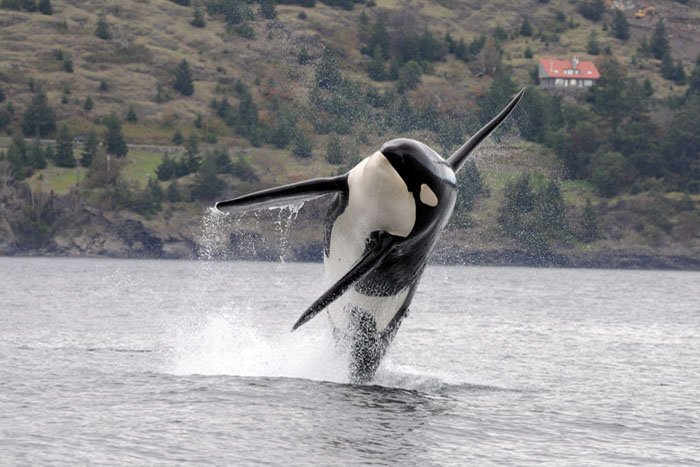
The unintentional or incidental killing of an endangered whale, for example, would no longer be considered illegal, even if it was easily foreseeable.
“A vessel that inadvertently strikes a whale has not taken it, because the vessel’s course was not set against the whale,” the Nesvik memo says. “Felling a tree is not a take of the bats roosting in it unless the tree is felled for the purpose of killing or capturing them.”
The new directive goes substantially beyond the administration’s recent elimination of the longstanding regulatory definition of “harm.” It declares that prohibited “take” requires an intentional act directed at a particular animal that directly and immediately affects that animal.
The administration’s July rule rescinded the regulatory definition of “harm,” which had expressly covered significant habitat modification that actually kills or injures protected wildlife. But the Sept. 14 directive goes considerably further. Rather than merely interpreting the word “harm,” the directive establishes requirements that it says apply to “take” generally — a statutory term Congress defined to include “harass, harm, pursue, hunt, shoot, wound, kill, trap, capture, or collect.”
The directive also violates the U.S. Supreme Court’s decision in Babbitt v. Sweet Home Chapter of Communities for a Great Oregon, where the majority rejected the contention that “take” is limited to conduct intentionally directed against particular animals.
Under the new Nesvik directive, Fish and Wildlife Service personnel are instructed to look for four elements: an affirmative act; an act intentionally directed at an animal; a direct and immediate effect; and a particular animal rather than populations, future occupants or unoccupied habitat. That could radically shrink the universe of activities the government considers to constitute unlawful take.
The directive could have far-reaching consequences for logging, mining, development, water diversions and other activities that foreseeably kill or injure endangered wildlife without deliberately targeting individual animals.
“If you chop down a tree full of endangered birds or race a huge ship through a pod of endangered whales, you should be held accountable for your destructive acts,” Hartl said. “But this administration wants to give wildlife killers a ‘Get out of jail free’ card. Imposing new limitations on the entire definition of take is a flagrant and illegal attempt to rewrite the Endangered Species Act via unilateral fiat. This would drive imperiled species over the cliff to extinction.”