
For Immediate Release, January 23, 2026
|
Contact: |
Meg Townsend, (971) 717-6409, [email protected] |
Stippled Studfish Swims Closer to Endangered Species Act Protection
Rare Fish Only Found in Alabama, Not Seen in Georgia Since 1990
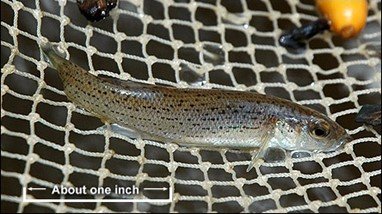
ATLANTA— In response to a petition by the Center for Biological Diversity, the U.S. Fish and Wildlife Service determined today that the stippled studfish may warrant protection under the Endangered Species Act. This rare freshwater fish is now found only in Alabama.
“It’s great news that these dazzling, freckly fish are one step closer to being protected under the Endangered Species Act,” said Meg Townsend, a freshwater attorney at the Center. “Stippled studfish have already completely disappeared from Georgia streams and without strong safeguards the few remaining populations in Alabama could also be lost forever.”
Once widespread across the Tallapoosa River system in Alabama and Georgia, stippled studfish have been driven to the edge of extinction. Decades of development, pollution and worsening drought have reduced the species to just a few isolated streams in Alabama, with no confirmed sightings in Georgia since 1990.
Stippled studfish depend on cold, clear water and clean sand and gravel to reproduce, performing a rare spawning ritual in which pairs dive into the streambed to lay eggs. Those conditions are disappearing as forested stream buffers are replaced by urban sprawl, poultry and livestock operations, clearcut logging, increasing sedimentation and water temperatures. Growth projections indicate these dangers will continue to intensify.
Dams and reservoirs throughout the Tallapoosa River watershed further fragment the studfish’s remaining habitat, blocking movement between populations and limiting access to spawning areas. This further isolates the few populations that remain.
Additional risks come from infrastructure like the 500-mile-long Sabal Trail fracked gas pipeline, which began operating in 2017 and crosses Hillabee Creek, one of the last streams where the fish still persists. This also increases the potential for water contamination from leaks or spills.
At the same time, the Southeast is experiencing more frequent and severe drought, heightening stress on the Tallapoosa and Coosa river systems and fueling interstate water conflicts among Alabama, Florida and Georgia. Climate models project these droughts and rising stream temperatures will worsen, threatening a species that generally cannot reproduce when water temperatures exceed 80 degrees Fahrenheit.
“Saving the irreplaceable stippled studfish means safeguarding the character of the Southeast’s rivers themselves,” said Townsend. “Endangered Species Act protection gives us the chance, and the resources, to preserve the natural heritage and living systems that make our rivers truly extraordinary.”
The Center for Biological Diversity is a national, nonprofit conservation organization with more than 1.8 million members and online activists dedicated to the protection of endangered species and wild places.
