
For Immediate Release, April 22, 2026
|
Contact: |
Tara Zuardo, (415) 419-4210, [email protected] |
South Carolina Crab Trap Petition Seeks to Protect Diamondback Terrapins
COLUMBIA, S.C.— The Center for Biological Diversity and allies filed a petition today asking the South Carolina Department of Natural Resources to adopt rules that would protect diamondback terrapins from drowning in blue crab pots.
Diamondback terrapins, found along the Atlantic and Gulf coasts from Massachusetts to Texas, are the only turtles in the world that live exclusively in coastal estuaries. These estuaries are also home to blue crabs, which are trapped in crab pots. Crab pots trap and drown imperiled diamondback terrapins, who have suffered population declines of 75% across most of their range over the past 50 years.
“South Carolina’s diamondback terrapins are drowning in blue crab pots every day even though there’s a simple, inexpensive way to prevent this ongoing tragedy,” said Tara Zuardo, a senior wildlife advocate at the Center. “It’s time for the Palmetto State to take basic steps to ensure that crab traps don’t kill even more of these imperiled turtles.”
Today’s petition, filed by the Center, Port Royal Sound Foundation and Lowcountry Ecological LLC., asks South Carolina to require bycatch reduction devices on all recreational and commercial blue crab pots in near-shore waters where terrapins are frequently found. These small, inexpensive devices prevent most terrapins from entering the pot while having little to no effect on crab haul.
Experts agree that blue crab pots pose the greatest threat to diamondback terrapins, with 60,000 to 80,000 killed in active and abandoned crab traps each year off the U.S. coastline. Baited blue crab pots are known to trap and drown terrapins, while fleets of traps are capable of steadily killing turtles until a population cannot sustain itself. Abandoned or lost traps — called ghost pots — can capture terrapins by the dozen.
New York and New Jersey already require bycatch reduction devices on recreational and commercial pots. Delaware, Florida, and Maryland require the devices on recreational pots.
Under state law, the agency must respond to the petition within 30 days.
In September 2024 the Center and 20 partner organizations petitioned NOAA Fisheries to protect diamondback terrapins as endangered under the Endangered Species Act.
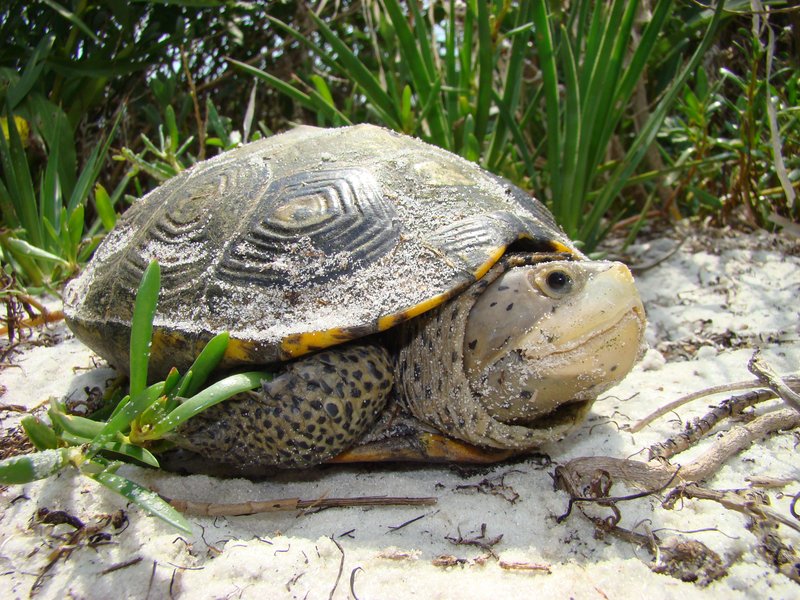
Diamondback terrapins are known for their stunning diamond-patterned shells and speckled skin. They spend most of their lives close to shore in coastal marshes, tidal creeks, mangroves and other estuarine habitats where they primarily feed on snails, clams, mussels and small crabs. Terrapins are a keystone species in salt marshes and mangroves, helping to maintain the health of those natural areas.
The Center for Biological Diversity is a national, nonprofit conservation organization with more than 1.8 million members and online activists dedicated to the protection of endangered species and wild places.
