
For Immediate Release, August 18, 2026
|
Contact: |
Russ McSpadden, (928) 310-6713, [email protected] |
Protected Desert Bulldozed for Second Border Wall in Arizona’s Organ Pipe Cactus National Monument
New Photos Document Widespread Clearing Near Quitobaquito Springs
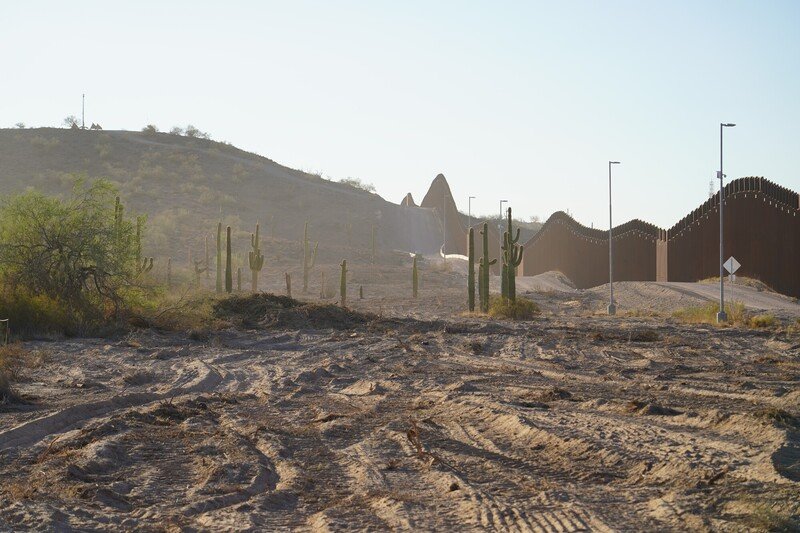
AJO, Ariz.— The Center for Biological Diversity released photographs today documenting significant clearing of protected desert land inside Organ Pipe Cactus National Monument for the Trump administration’s second border wall that will run parallel to the existing 30-foot-tall wall.
“This is the beginning of another destructive chapter for Organ Pipe Cactus National Monument and Quitobaquito Springs,” said Russ McSpadden, Southwest conservation advocate at the Center for Biological Diversity. “Contractors are using heavy construction equipment to strip protected and pristine Sonoran Desert landscapes bare to make way for industrial staging grounds and border wall dead zones. The Trump administration has already shown what happens when it treats our beloved public lands as expendable, and now that destruction is advancing toward Quitobaquito.”
The photographs, taken Aug. 16 and Aug. 17, show the desert landscape leveled to dirt at two locations east of Quitobaquito Springs. At one location, about 3.4 miles east of Quitobaquito, a massive staging yard is being expanded. At a second, about 2.5 miles east of Quitobaquito, a linear swath of desert has been bulldozed bare for the second border wall.
The leveled areas are in one of the most culturally and ecologically significant landscapes in the Sonoran Desert. The second wall is planned to run about 100 feet north of the existing border wall. It will extend through the Quitobaquito area, threatening the spring, its surrounding wetland, and plants and animals found nowhere else in the country.
Quitobaquito Springs provides critical habitat for three endangered species — the Quitobaquito pupfish, Sonoyta mud turtle and Quitobaquito tryonia, a tiny springsnail found only at the spring. The Center successfully advocated for Endangered Species Act protection and critical habitat for the Sonoyta mud turtle and has repeatedly challenged threats to the pupfish and Quitobaquito Springs.
In May, the Center sued the Trump administration for failing to finalize Endangered Species Act protections for the Quitobaquito tryonia after the U.S. Fish and Wildlife Service determined in 2023 that it should be listed as endangered.
The federal government has closed several roads along the southern border of Organ Pipe Cactus National Monument, including West Border Road from Lukeville to Quitobaquito Springs and East Border Road from Lukeville toward the Santa Rosa Mountains at the western boundary with the Tohono O’odham Nation.
The road closures took effect July 31 and apply to all vehicle and pedestrian traffic. With the public barred from these public lands, potentially devastating damage to the monument’s cultural sites, endangered species habitat and other natural and cultural resources could go undocumented.
Because the roads are closed, Center staff hiked for miles through the desert to document the construction areas and newly cleared sites. The photographs provide a rare look at the early stages of the work in areas otherwise inaccessible to the public.
Background
Organ Pipe Cactus National Monument contains many archaeological and cultural sites associated with thousands of years of human use of the Sonoran Desert. Quitobaquito Springs has been occupied by people for thousands of years and is part of the historic homeland of the Hia C-ed O’odham and Tohono O’odham. The area contains archaeological artifacts and remains culturally significant to O’odham people.
In April border wall contractors working in the nearby Cabeza Prieta National Wildlife Refuge destroyed part of the Las Playas Intaglio, an approximately 1,000-year-old fish-shaped geoglyph. Contractors scraped a roughly 50-foot-wide construction corridor through the 272-foot-long cultural site while working on border wall construction.
The new clearing inside Organ Pipe Cactus National Monument comes as the Tohono O’odham Nation has been fighting the Trump administration’s plans to build two border walls across reservation lands.
The Nation filed a lawsuit in June challenging the planned construction, saying the federal government and its contractors would be trespassing on tribal lands and that construction would damage sacred sites and threaten important ceremonies and religious practices. In August the Nation posted no-trespassing signs in response to concerns about federal contractors entering tribal lands for border wall work.
Photos are available for media use.
The Center for Biological Diversity is a national, nonprofit conservation organization with more than 1.8 million members and online activists dedicated to the protection of endangered species and wild places.
