
For Immediate Release, October 13, 2026
|
Contact: |
Tara Zuardo, (415) 419-4210, [email protected] |
Petition Urges New Jersey to Protect Turtles From Drowning in Crab Pots
TRENTON, N.J.— The Center for Biological Diversity, CU Maurice River, Hackensack Riverkeeper, Delaware Riverkeeper, New Jersey Conservation Foundation, and Project Terrapin, LLC today petitioned the New Jersey Department of Environmental Protection to require simple bycatch-reduction devices on blue crab pots statewide to protect diamondback terrapins. The devices would prevent these imperiled turtles from becoming trapped and then drowning.
“New Jersey’s diamondback terrapins shouldn’t drown in crab pots when there’s a cheap, proven fix sitting right in front of us,” said Tara Zuardo, a senior advocate at the Center. “New Jersey already knows these devices work, and the state’s own wildlife plan says their use should be expanded.”
Bycatch-reduction devices use smaller openings that keep more terrapins from entering traps and drowning while still allowing crabs to enter. They would replace the state’s less-protective standard and expand protections beyond the narrow waterways and man-made lagoons where the devices are currently required.
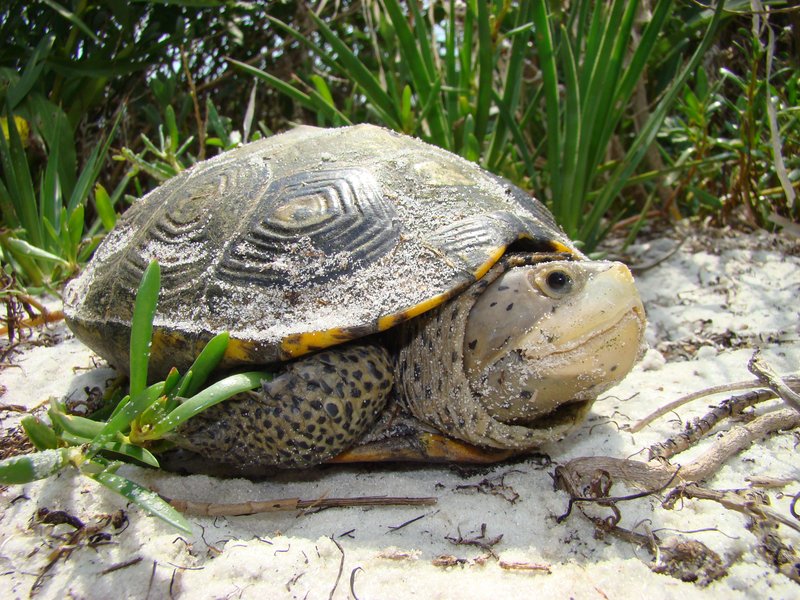
Diamondback terrapins live in New Jersey’s salt marshes, tidal creeks, bays, coves and other coastal estuaries. Terrapins breathe air and drown if they enter a submerged crab pot and can’t escape. Lost and abandoned “ghost” pots can continue trapping and killing wildlife even when they are no longer catching crabs for anyone.
New Jersey already requires terrapin excluder devices on certain blue crab pots used by recreational and commercial crabbers, but only in narrow waterways and man-made lagoons. That leaves terrapins vulnerable to drowning in crab pots throughout other coastal habitats. Even though New Jersey has had its existing requirement in place since the 1990s, thousands of terrapins are still drowning every year in traps set along the state’s coast.
A new mapping analysis included in the petition found that nearly 95% of the acreage of tidal waterways with documented diamondback terrapin habitat falls outside the areas where New Jersey currently requires bycatch reduction devices.
“Terrapins don’t know whether the creek they’re swimming through is safe because it’s 145 feet wide or deadly because it’s 10 feet wider and full of dangerous crab traps,” said Zuardo. “Wildlife protections shouldn’t disappear because an animal crosses an invisible line on a map. Putting a cheap bycatch-reduction device on every crab pot is simpler for crabbers, simpler still to enforce, and far safer for terrapins.”
These turtles live primarily in coastal marshes from Massachusetts to Texas, where their populations have plummeted by 75% in the past 50 years. In many locations along the Atlantic and Gulf coasts, terrapin populations have been wiped out completely.
Beyond requiring these devices statewide, today’s petition asks the department to establish seasonal crab-pot closures in high-risk terrapin habitat, particularly tidal creeks, shallow estuarine waters, and salt-marsh complexes where terrapins are most vulnerable. It also seeks a permanent statewide program to find and remove abandoned and lost crab pots, stronger enforcement and compliance inspections, terrapin-protection information for crab-pot licensees, and monitoring and reporting to identify mortality hotspots and evaluate whether conservation measures are working.
The Center for Biological Diversity is a national, nonprofit conservation organization with more than 1.8 million members and online activists dedicated to the protection of endangered species and wild places.
