
For Immediate Release, February 17, 2026
|
Contact: |
Ragan Whitlock, Center for Biological Diversity, (727) 426-3653, [email protected] |
Petition Aims to Protect Habitat for Endangered Puerto Rican Plain Pigeon
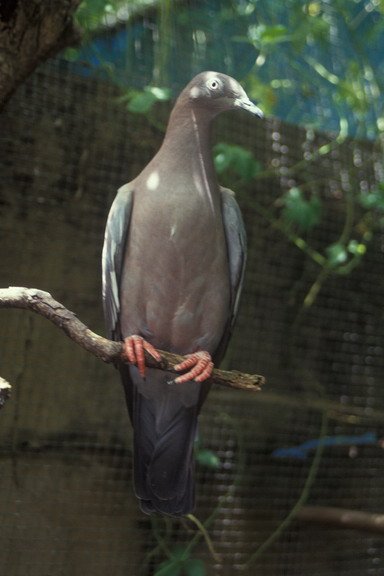
SAN JUAN, Puerto Rico— Conservationists today petitioned the U.S. Fish and Wildlife Service to designate and protect critical habitat for the Puerto Rican plain pigeon under the Endangered Species Act. The plain pigeon, despite being listed as endangered in 1970, has never received the corresponding habitat protection and continues to decline in numbers.
The request comes from the Center for Biological Diversity, public interest attorney Julio C. Colón, Frank S. González Garcίa, Hon. Hilda Dίaz-Soltero, Comité Despertar Cidreño, Sierra Club Puerto Rico and Patronato Cidreño.
Plain pigeon populations initially declined in the 1930s when mass deforestation, unregulated hunting, predation and hurricanes almost drove the species to extinction. The pigeons were protected as endangered in 1970. Their population slowly increased over the next few decades
A series of devastating hurricanes have hit Puerto Rico in recent years and significantly harmed pigeon populations. In September 2017, Irma, a category 4 hurricane, and Marίa, a category 5 hurricane, caused major damage to the landscape. The plain pigeons have never recovered to their pre-hurricane densities. The population plummeted from 11,984 individuals in 2017 to just 287 in 2024. Experts now estimate that the number is likely much lower — around 55 to 200 birds in the wild.
“For decades, the paloma sabanera has been pushed toward extinction because its habitat was treated as expendable, despite clear science and repeated warnings,” said Eliezer Colón, president of Comité Despertar Cidreño. “Designating critical habitat is how we reverse that failure — by setting firm limits, empowering communities, and finally giving this endemic species a real chance to recover before it’s too late.”
“The paloma sabanera is an endemic bird to Puerto Rico, and it deserves our advocacy as a unique symbol of the island’s wildlife,” said Julio C. Colón, public interest lawyer and environmental advocate.
“The Puerto Rican plain pigeon is a unique and irreplaceable part of our island’s biodiversity, and it is now on the brink of extinction,” said Hernaliz Vázquez Torres, Sierra Club’s Puerto Rico chapter director. “Decades of habitat loss, compounded by increasingly severe, climate-driven hurricanes, have pushed this species to a breaking point. Climate-driven hurricanes have devastated the Puerto Rican plain pigeon, and without protected habitat, another major storm could mean extinction. Protecting critical habitat is not optional — it is essential. Sierra Club Puerto Rico stands with conservation partners in demanding immediate federal action to prevent the permanent loss of this endemic species.”
The risk of another major hurricane isn’t the only threat to the species. The Service has consistently found that the plain pigeon’s fragmented and shrinking habitat is an important factor in the species’ decline. The agency has also recognized that the pigeons could become extinct if the status quo of low reproduction and increasing predation from nonnative species continues.
“It’s time for the Fish and Wildlife Service to atone for decades of inadequate action by finally providing the life-saving habitat protections that these amazing birds desperately need,” said Ragan Whitlock, an attorney at the Center for Biological Diversity. “Another hurricane could spell extinction for a species as close to the brink as the plain pigeon. The agency needs to protect the places these birds live before they vanish forever.”
“Deforestation and urban sprawl are drastically reducing the Puerto Rican plain pigeon's chances of survival and disrupting the ecosystems on which it relies as a natural gardener,” said Laura Torres, president of Patronato Cidreño. “We cannot allow this symbol of Cidra’s identity to disappear; protecting its habitat today is the only guarantee that future generations will also be able to enjoy this ecological heritage.”
“Designating critical habitat, alongside the captive breeding program demanded by science, is the final lifeline for the Puerto Rican plain pigeon,” said Frank S. González García, a Puerto Rican engineer concerned about the loss of natural resources. “The Fish and Wildlife Service has one last opportunity to do the right thing before this species vanishes forever.”
The Service previously supported an aviary at the University of Puerto Rico – Humacao campus. Spearheaded by the late Professor Raúl Pérez-Rivera, the aviary successfully bred and released 31 plain pigeons into the wild. Pérez-Rivera, a key collaborator on the petition and a long-time champion of the Puerto Rico plain pigeon, passed away on Dec. 25, 2025. He is remembered for a lasting commitment to conservation that will have an enduring impact on this imperiled species.
“The legacy of Professor Raúl Pérez-Rivera reminds us that conservation works when it is matched with institutional responsibility,” said Hernaliz Vázquez Torres, Sierra Club’s Puerto Rico chapter director. “While new aviaries offer hope for the Puerto Rican plain pigeon, they cannot succeed without protected habitat. Sierra Club Puerto Rico calls on the U.S. Fish and Wildlife Service to act now and safeguard the lands these birds need to live and reproduce in the wild.”
“Raul’s leadership, vision and commitment to the plain pigeon is a beacon and inspiration for those of us working to avoid the species’ extinction today,” said Hilda Dίaz-Soltero, former Secretary of Puerto Rico Department of Natural Resources.
Conservationists and the University of Puerto Rico have recently agreed to re-establish an aviary at the University of Puerto Rico – Humacao. A private donor has committed to finance, design, build and manage a second aviary in Dorado, Puerto Rico. These attempts to conserve the critically endangered species will only be successful, however, if the Service ensures the protection of adequate critical habitat for the species now and in the future.
The Endangered Species Act prohibits federal agencies from authorizing activities that will destroy or harm a protected species’ critical habitat. Species with federally protected critical habitat are more than twice as likely to be recovering as species without it.
The Center for Biological Diversity is a national, nonprofit conservation organization with more than 1.8 million members and online activists dedicated to the protection of endangered species and wild places.
Comité Despertar Cidreño is a community-based environmental and civic organization founded in 1987 in Cidra, Puerto Rico. For more than three decades, the organization has engaged in environmental advocacy, public education, and community monitoring focused on the protection of forests, watersheds, wildlife habitat, and public natural resources within the municipality of Cidra and its surrounding regions. The organization has played a leading role in documenting habitat loss, deforestation, and land-use changes affecting the Puerto Rican Plain Pigeon (Patagioenas inornata wetmorei), particularly within known breeding, foraging, and movement corridors in the central mountain region of Puerto Rico. Comité Despertar Cidreño works closely with residents, educators, scientists, and conservation partners to gather field observations, photographic evidence, and local knowledge relevant to the species’ conservation status.
The Patronato Cidreño is a volunteer organization. Our vision is for current and future generations to know and share their history. Our mission is to rescue, protect, digitize, and promote the history, culture, and art of Cidra, the City of Eternal Spring. Additionally, we collaborate with all causes that benefit the environment and tourism.
The Sierra Club Puerto Rico Chapter is part of the Sierra Club, one of the most influential grassroots environmental organizations in the United States, founded in 1892. Established in Puerto Rico in 2005, the Chapter organizes within the island’s distinct ecological, social, and colonial reality. We are a member-led movement of more than 2,000 people across the archipelago, building power alongside frontline communities most impacted by pollution, energy insecurity, and climate disasters. We defend every person’s right to access and enjoy nature while advancing clean energy, protecting public health, defending wildlife, conserving critical ecosystems and ecological corridors, and preserving remaining wild places. Through grassroots organizing, public education, lobbying, and legal action, we turn community power into policy change at the local, territorial, and federal levels.
