
For Immediate Release, August 26, 2026
|
Contact: |
Randi Spivak, (310) 779-4894, [email protected] |
New Study: Trump’s Move to Kill Roadless Rule Puts 400 Imperiled Species on Extinction Fast Track
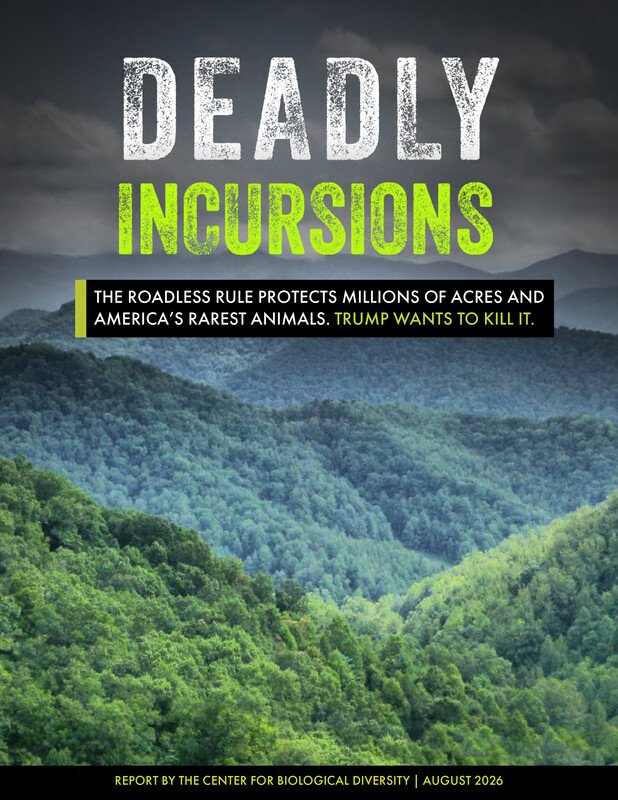
WASHINGTON—The Trump administration’s move to dismantle the Roadless Rule could hasten the extinction of more than 400 threatened and endangered plants and animals protected under the Endangered Species Act, according to an analysis released today by the Center for Biological Diversity.
The report, Deadly Incursions, also finds that scrapping the Roadless Rule would put 7.4 million acres of designated endangered species critical habitat and nearly 1,800 miles of protected rivers and streams at risk.
“Our national forests are home to some of America’s most iconic animals, from grizzlies to hellbenders. These forests provide clean drinking water to countless communities. Bulldozing more roads through them will mean dirtier water, fragmented wildlife habitat and greater wildfire risk,” said Randi Spivak, public lands policy director at the Center for Biological Diversity. “For a generation the Roadless Rule has kept our wildest places wild. If Trump succeeds in scrapping it, he’ll do irreversible damage to our wildlife, water and the wild places that define the American landscape.”
Last week the Trump administration released its proposal to rescind the landmark 2001 Roadless Area Conservation Rule, removing protections from nearly 45 million acres of wild, unfragmented national forests and up to 70,000 miles of waterways.
Eliminating the Roadless Rule would be the single largest evisceration of public lands protections in U.S. history, threatening national forests in 37 states.
The Center’s new report is the first examination of where the Trump administration’s proposed dismantling of Roadless Rule protections overlaps with critical wildlife habitat and the ranges of threatened and endangered animals and plants. Critical habitat is land and water that federal scientists have determined is essential to the long-term survival of animals and plants protected under the Endangered Species Act.
The report finds that imperiled wildlife across the country would suffer devastating and lasting harms, including grizzly bears in the Rocky Mountains, native salmon in the Pacific Northwest and Alaska, Mexican spotted owls and Gila trout in the Southwest, and rare butterflies and wildflowers nationwide.
Road construction and logging would cause significant soil erosion, sending sediment into waterways. That would raise water temperatures, smother spawning beds and send water pollution downstream. This threatens imperiled aquatic life such as Chinook salmon, bull trout, candy darters, freshwater mussels and frogs, whose critical habitat may be outside roadless areas.
From the old-growth rainforests of Alaska’s Tongass to the sky island ranges of the Southwest and the headwaters of the Appalachians, the most imperiled wildlife in America’s national forests all need large, connected landscapes where nature’s systems remain intact.
The report notes that the reasons forestry experts developed and fought for the Roadless Rule 25 years ago are even more compelling today. They recognized that the country’s last remaining intact national forests and their inhabitants required protection from the road building and logging that had already fragmented so much of the American landscape.
Grizzly bears, wolverines, salmon, spotted owls, hellbenders and dozens of other threatened and endangered species depend on roadless areas. Some roam across millions of acres; others rely on a single watershed for their survival. All need consistent, landscape-scale protection that only a national rule can provide.
Roadless forests also provide drinking water for millions of Americans. Communities from Sitka to Albuquerque to Atlanta rely on watersheds with headwaters in roadless areas of national forests that could be at risk if Trump succeeds in repealing the Roadless Rule.
The Aug. 18 announcement from the U.S. Agriculture Department preceded release of the draft environmental analysis, giving the public until Sept. 21 to comment on the proposed Roadless Rule rescission.
Photos are available for media use.
The Center for Biological Diversity is a national, nonprofit conservation organization with more than 1.8 million members and online activists dedicated to the protection of endangered species and wild places.
