
For Immediate Release, October 9, 2026
|
Contact: |
Ben Grundy-Hawley, (510-844-7121), [email protected] |
New Federal Rules Fall Short on Protecting West Coast Whales From Entanglements
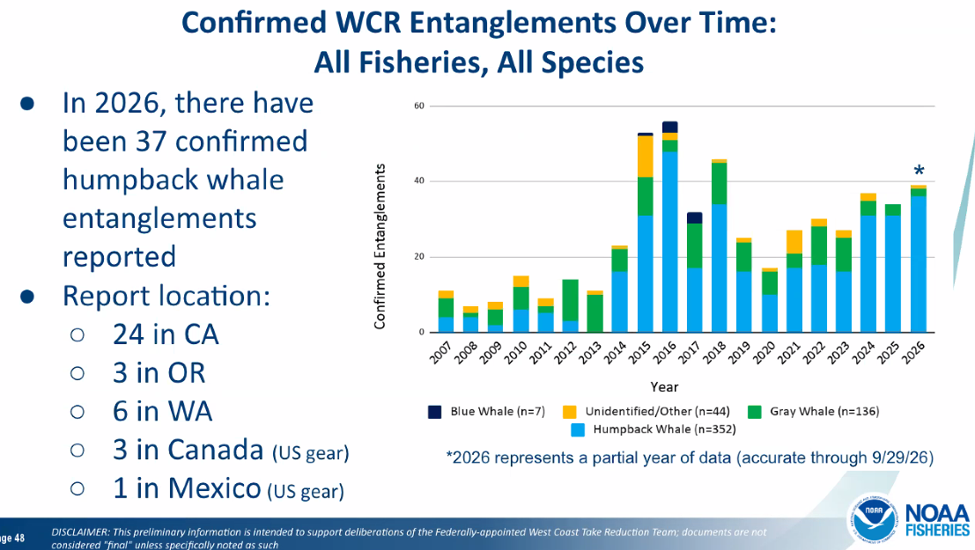
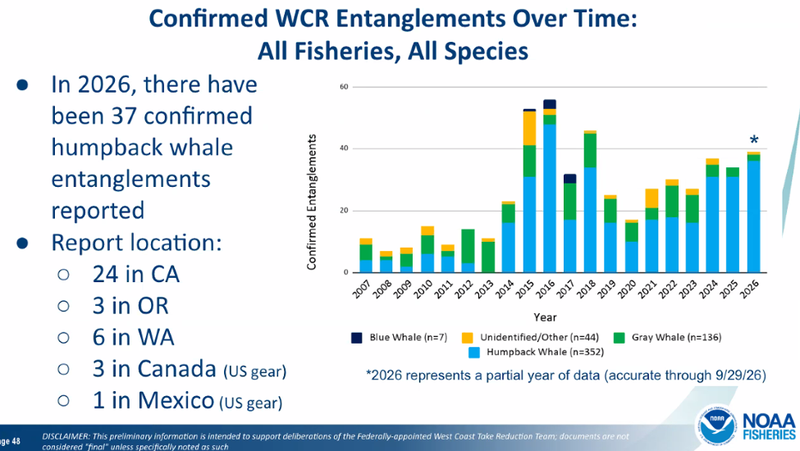
WASHINGTON— The National Marine Fisheries Service published new rules today for the U.S. West Coast sablefish pot fishery that are unlikely to reduce life-threatening whale entanglements, despite that being the rules’ aim. This fishery has entangled three whales so far this year. Overall, entanglements remain at elevated levels on the West Coast, with new preliminary data showing 37 humpback whales have been entangled so far this year.
“It’s really troubling to see this many humpback whale entanglements attributed to this fishery in less than a year,” said Ben Grundy-Hawley, an oceans campaigner at the Center for Biological Diversity. “The agency needs to enact much stronger protections for this fishery to really address the urgency of this deadly problem.”
The new measures would require participants in the fishery to adhere to stricter line marking requirements to help officials identify the source of fishing gear found on entangled whales. They also limit the length of fishing line that floats near the surface and allow fishers voluntarily to mark their gear with only one vertical fishing line rather than two.
In 2025 the National Marine Fisheries Service confirmed 33 whale entanglements (30 humpback whales and three gray whales) off the coasts of Oregon, California and Washington. The preliminary 2026 data recently released by the Service shows the highest number of West Coast humpback whale entanglements since 2016, at 37 whales, with three months still to go.
“Trying to stop whale entanglements without reducing fishing line in the water makes no sense,” Grundy-Hawley said. “These new rules will help figure out what kind of gear is causing deadly entanglements, but won’t do enough to stop the problem.”
Scientists have developed models to help anticipate changes in the whales’ habitat that can increase entanglements. Marine heatwaves and El Niño press warm offshore conditions against the cool-water coastal corridors where whales feed, compressing their habitat toward the coast and fishing gear.
In April the agency’s West Coast Take Reduction Team recommended that the Service include today’s protections in its plan to reduce entanglements in the sablefish pot fishery.
The Center for Biological Diversity is a national, nonprofit conservation organization with more than 1.8 million members and online activists dedicated to the protection of endangered species and wild places.
