
For Immediate Release, October 1, 2026
|
Contact: |
Nathan Donley, (971) 717-6406, [email protected] |
Legal Petition Urges Trump Officials to Protect America’s Food From Pesticide Residues
Action Follows Supreme Court Ruling Limiting Lawsuits From People Suffering Pesticide-Linked Diseases
WASHINGTON— The Center for Biological Diversity submitted a legal petition today asking the Trump administration to protect the food on America’s tables from the increasing amounts of dangerous residues of glyphosate and other pesticides sprayed on crops immediately before harvest.
The emergency filing with the Environmental Protection Agency and Food and Drug Administration comes after the Supreme Court sided with Bayer and the Trump administration. That ruling limited Americans’ ability to sue pesticide companies for harms, like cancer and Parkinson’s disease, linked to many pesticides.
“American families have been left to fend for themselves amid the Trump administration’s dangerously deficient oversight of pesticides and the Supreme Court gutting the right to sue pesticide companies,” said Nathan Donley, environmental health science director at the Center. “It’s time for this administration to match its lofty rhetoric and take meaningful steps to reduce the unchecked contamination of America’s food with dangerous pesticides.”
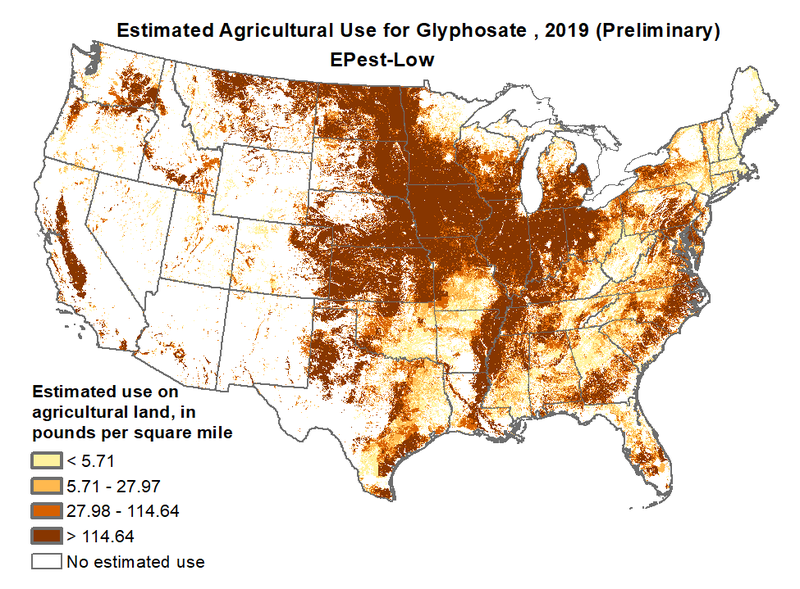
Many pesticides, including glyphosate, are increasingly used as preharvest desiccants: They are sprayed on food crops right before harvest to kill the plant itself. Since the pesticide is used to quickly “burn down” the plant right before it is harvested, it leaves no time for the pesticide to break down or wash off before the food is packaged and put on kitchen tables.
These particular pesticide uses are generally responsible for the highest levels of pesticide contamination in food. Government agencies and nongovernmental organizations have consistently found glyphosate contamination of common food items like bread, beer, oats, snack bars, cereals, hummus, pasta and chips.
As glyphosate use has skyrocketed, the EPA has dramatically increased the allowable level of glyphosate contamination on crops commonly treated preharvest, like oats, barley and wheat.
The allowable glyphosate residue on oats, for example, has increased by 300 times, or 30,000%, from 1996 to 2009, while crops without preharvest uses, such as rice and hops, have not seen any increase in allowable glyphosate residues over that same period.
Many pesticides allowed to be used immediately before harvest are linked to debilitating chronic diseases. Paraquat, for example, is linked to Parkinson’s disease; diuron and glyphosate are probable human carcinogens; saflufenacil is a PFAS or “forever chemical.”
“The EPA’s decision to allow our food to be sprayed with pesticides right before harvest pretty much guarantees greater exposure to dangerous chemicals in our daily meals,” said Donley. “It’s outrageous and completely out of line with good science and basic common sense. We’re calling on the EPA and the FDA to rein in this risky practice to lower the amount of synthetic chemicals on our breakfast, lunch and dinner plates.”
In June 2026 President Trump signed Executive Order 14414 requiring, in part, the EPA to review all data for preharvest desiccant pesticide uses to ensure that the agency is complying with current statutes and regulations.
Today’s petition asks the administration to go beyond that order by requiring the EPA and the FDA to jointly conduct a review of the risks and harms of herbicides used as desiccants. The petition also urges the agencies to reassess existing tolerance levels for herbicides used as desiccants, including lowering the glyphosate tolerance from the current 30 parts per million to 0.05 parts per million for the most contaminated foods.
Additionally, the petition asks the FDA to initiate rulemaking to improve its pesticide monitoring program and institute formal consultation between the two agencies when setting acceptable pesticide residue levels on food.
The Center for Biological Diversity is a national, nonprofit conservation organization with more than 1.8 million members and online activists dedicated to the protection of endangered species and wild places.
