
For Immediate Release, September 1, 2026
|
Contact: |
Danny Waltz, (303) 880-9136, [email protected] |
Lawsuit Seeks Habitat Protections for Red Knots Along Gulf, Atlantic Coasts
WASHINGTON— The Center for Biological Diversity today sued the U.S. Fish and Wildlife Service for failing to designate critical habitat for red knot shorebirds. Red knots were listed under the Endangered Species Act more than a decade ago but still have not received lifesaving protections for the places they live.
“Red knots are dying of starvation while the Trump administration ignores its obligation to protect the places these incredible birds need to survive,” said Danny Waltz, a senior attorney at the Center. “Every day of delay finalizing habitat protections for these shorebirds pushes us closer to losing them and their legendary migrations forever.”
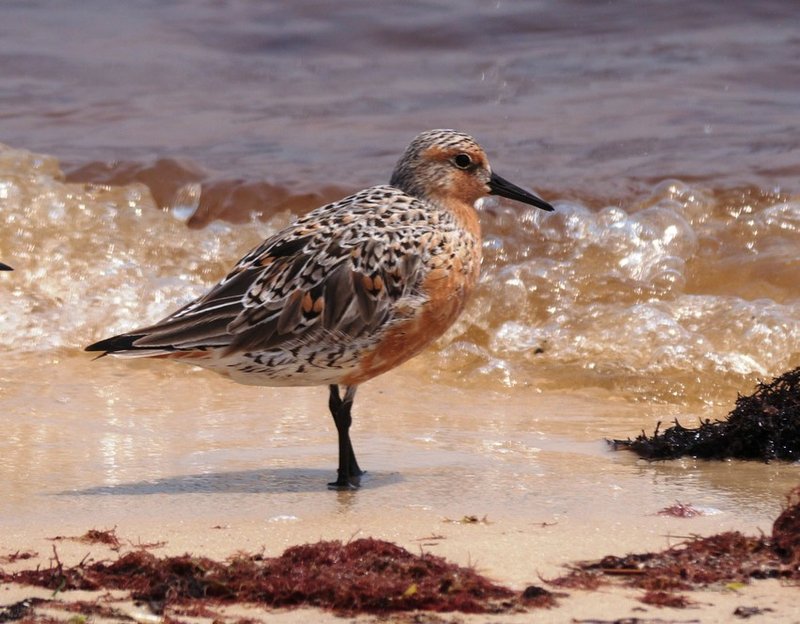
Red knots are shorebirds with rusty plumage known for making 19,000-mile round-trip migrations from the southern tip of South America to their breeding grounds in the Arctic. They depend on coastal stopover sites in the United States where they can rest and gorge on food like horseshoe crab eggs to fuel their journeys.
Red knot populations have declined by 94% in the last four decades — one of the steepest population declines among shorebirds in North America.
The Service protected red knots as a threatened species in 2015, and identified decline of Atlantic horseshoe crab populations as one of the major dangers to red knots. Red knots depend primarily on horseshoe crab eggs along Atlantic and Gulf coast beaches to fuel their migrations.
However, the Service missed its legal deadline to designate and protect critical habitat for these birds. In April 2023 the Service proposed to designate 683,405 acres of critical habitat, but the proposed rule has not been finalized. The Service is now more than 10 years overdue on its red knot critical habitat designation deadline.
The designation of critical habitat is an important step in any species’ recovery. A Center study found that plants and animals with federally protected critical habitat are more than twice as likely to move toward recovery than species without it.
In July the Center and conservationist allies petitioned the New Jersey Department of Environmental Protection to issue a declaratory ruling on whether a biomedical company persistently violated the state’s moratorium on harvesting, killing and injuring horseshoe crabs. The moratorium was enacted to protect red knots and other migratory shorebirds. The New Jersey agency has not yet issued a decision on that petition.
The Center for Biological Diversity is a national, nonprofit conservation organization with more than 1.8 million members and online activists dedicated to the protection of endangered species and wild places.
