
For Immediate Release, February 17, 2026
|
Contact: |
Tierra Curry, (928) 522-3681, [email protected] |
Lawsuit Seeks Endangered Species Protection for Hellbenders
Trump Administration Fails to Finalize Listing for Prehistoric Salamander
WASHINGTON— The Center for Biological Diversity sued the U.S. Fish and Wildlife Service today to force the agency to set a binding date to enact federal protections for hellbender salamanders under the Endangered Species Act.
The agency was required to finalize protections for Eastern hellbenders in December 2025 but hasn’t done so. In 2025 not a single plant or animal was protected under the Endangered Species Act for the first time since 1981.
“Trump’s administration has gone beyond foot-dragging to full-on contempt for life by sidelining protections for endangered wildlife like hellbenders,” said Tierra Curry, endangered species co-director at the Center. “It’s horrifying that political attacks on environmental safeguards could erase the existence of an animal as ancient and magnificent as the hellbender.”
The final listing rule would have extended protection to hellbenders from New York to Georgia, filling in the gaps in previous listings and protecting all populations of hellbenders. Trump officials missed the deadline and reclassified publication of the rule as a “long-term action” with no definitive date for issuance.
Hellbenders face tremendous threats from activities that harm water quality in rivers and streams. Throughout their 15-state range, only 60% of historical populations survive and only 12% of remaining populations are stable and successfully reproducing.
The range of eastern hellbenders includes Alabama, Georgia, Illinois, Indiana, Kentucky, Maryland, Mississippi, Missouri, New York, North Carolina, Ohio, Pennsylvania, Tennessee, Virginia and West Virginia. Hurricane Helene devastated populations in the healthiest part of their range in North Carolina and Tennessee.
The Center and allies first filed a legal petition seeking Endangered Species Act protection for eastern hellbenders in 2010. After a decade of delay and two lawsuits to enforce listing deadlines, in 2021 hellbenders from the Missouri River gained protection, but range-wide protection was denied.
The Center and allies challenged the denial in 2021 and a court ordered the Service to redo its analysis, leading to the 2024 listing proposal.
Today’s lawsuit was filed in the U.S. District Court in Tucson.
Background
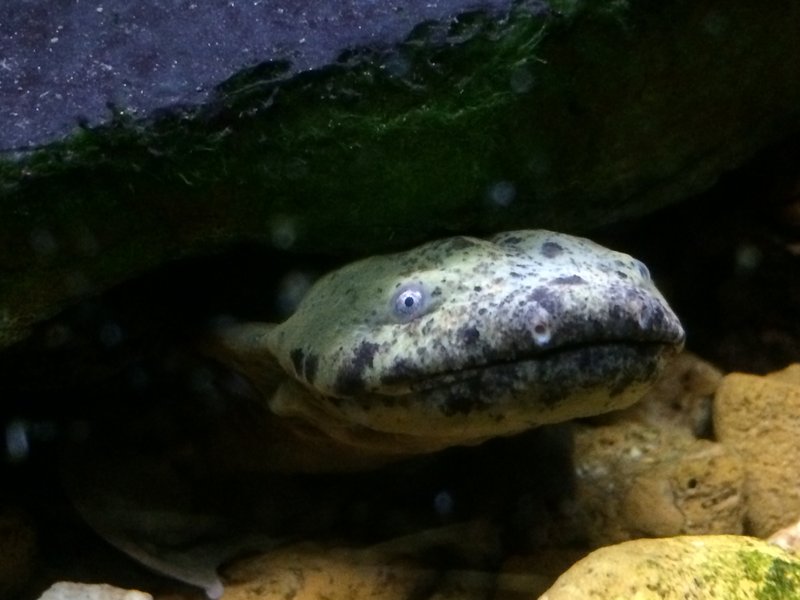
At 2 feet long and topping 4 pounds, hellbenders are the largest salamanders in North America. Their closest relatives are the giant salamanders of Japan and China.
They are considered living fossils because they have changed little over the last 160 million years. They are a cultural icon throughout the Appalachian Mountains.
Hellbenders were previously recognized as two subspecies, Ozark and Eastern, but genetic analysis has revealed that there are likely five species: Ozark hellbenders, Missouri River hellbenders, Tennessee River hellbenders, Kanawha River hellbenders and Susquehanna River hellbenders. Their classification is currently being revised.
Endangered Species Act safeguards have been indefinitely delayed for hundreds of imperiled species in addition to the hellbender as their protections have been deemed “long-term actions.” The Service lost 18% of its staff last year, including more than 500 scientists, and the Endangered Species Act listing budget was slashed to 2004 levels.
Instead of prioritizing wildlife protection, the agency proposed a rule to undermine habitat protection for endangered species and proposed a suite of regulations to make it harder for species to gain listing and critical habitat protections.
The Center for Biological Diversity is a national, nonprofit conservation organization with more than 1.8 million members and online activists dedicated to the protection of endangered species and wild places.
