
For Immediate Release, April 27, 2026
|
Contact: |
Meg Townsend, (971) 717-6409, [email protected] |
Lawsuit Launched to Secure Endangered Species Protection for Lake Sturgeon
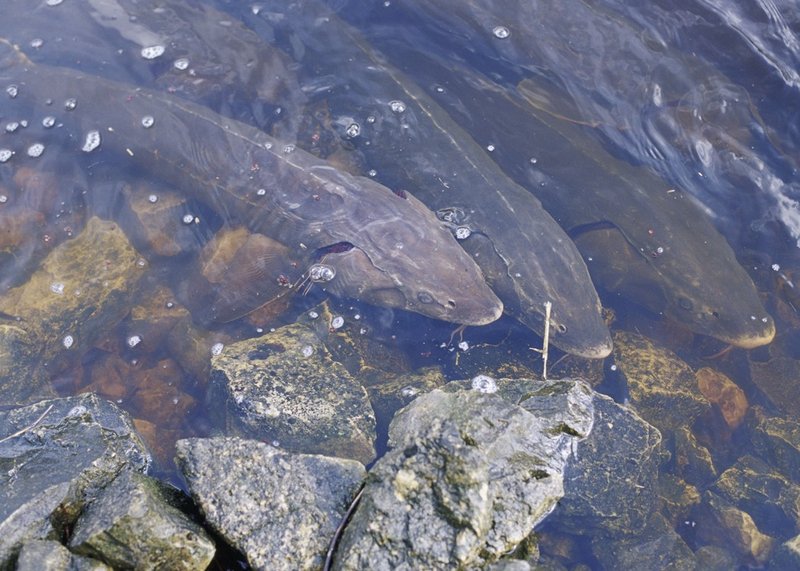
CHICAGO— The Center for Biological Diversity today notified the U.S. Fish and Wildlife Service that it intends to sue the agency for illegally denying Endangered Species Act protections to America’s populations of lake sturgeon. These ancient freshwater fish have survived since the time of the dinosaurs but are struggling to recover from centuries of human harm.
America’s remaining lake sturgeon are found mostly in the Great Lakes and their tributaries, as well as in the Mississippi River Basin.
“The Fish and Wildlife Service’s decision is terrible for lake sturgeon and bad for everyone who cares about healthy rivers and lakes,” said Meg Townsend, a freshwater attorney at the Center. “These fish are survivors from another era, but they can’t outswim dams, pollution and a politically motivated choice not to protect them. Ignoring the science and pretending they’re secure because of a few isolated success stories ignores the bigger picture of the lake sturgeon’s decline.”
The Service concluded in 2024 that listing the lake sturgeon as endangered or threatened was “not warranted,” despite widespread habitat loss, persistently low populations and mounting climate threats across the species’ range.
The Center petitioned for protection of the sturgeon in 2018 either including the entire species or in part, which is allowed by the Endangered Species Act and is how many populations of Pacific salmon are protected. Today’s lawsuit focuses on the Service’s refusal to consider protections for regional populations that are geographically isolated and differ in their genetics and behavior.
“These freshwater giants have patrolled North American waters through unfathomable ages and the fact that human activity and negligence now endanger their survival is a tragedy,” said Jesse Berns-Zieve, a law student at the University of Chicago and member of the Abrams Environmental Law Clinic. “Congress enacted the Endangered Species Act to address these kinds of threats, and we urge the Fish and Wildlife Service to promptly correct its error and to ensure that lake sturgeon have the protections they now need to survive.”
Millions of these giant, ancient fish once lived in the Great Lakes and Mississippi River Basin, where they played a vital ecological role as long-lived, bottom-feeding fish. Individuals can live more than 100 years, but females may not reproduce until they are 15 to 25 years old. This makes the species especially vulnerable to population crashes and slow to recover.
Today the population is less than 1% of historic levels. Overfishing in the 19th and early 20th centuries decimated lake sturgeon populations, and the construction of dams blocked access to critical spawning habitat throughout much of their range. Many populations remain small, fragmented or completely reliant on hatchery stocking rather than natural reproduction.
“Lake sturgeon have survived ice ages and mass extinctions, so it would be a tragic failure of modern conservation if they disappear on our watch because federal officials refused to do their job and follow the science and the law,” said Townsend. “There’s still time for the Fish and Wildlife Service to correct course and do right by these incredible fish.”
Today’s notice was sent by the Abrams Environmental Law Clinic at the University of Chicago Law School, whose lawyers and students represent the Center.
Background
Lake sturgeon (Acipenser fulvescens) are among North America’s largest and oldest freshwater fish, capable of growing more than 6 feet long. Historically abundant, they were heavily exploited for meat and caviar before protective measures were enacted.
Dams and hydroelectric facilities continue to harm lake sturgeon by blocking access to spawning habitat, fragmenting sturgeon populations and altering stream flows. Other threats to sturgeon include river dredging and channelization, habitat fragmentation, climate change and invasive species.
Some states and Tribal organizations are working to restore sturgeon spawning populations. But the sturgeon occupy a fraction of their historic range, and most populations are small, isolated and face a multitude of ongoing threats.
The Center for Biological Diversity is a national, nonprofit conservation organization with more than 1.8 million members and online activists dedicated to the protection of endangered species and wild places.
