
For Immediate Release, November 19, 2026
|
Contact: |
Taylor McKinnon, (801) 300-2414, [email protected] |
Lawsuit Launched to Protect Threatened Fish in Grand Canyon
GRAND CANYON NATIONAL PARK— The Center for Biological Diversity filed a notice today of its intent to sue two federal agencies for violating the Endangered Species Act by approving and carrying out Glen Canyon Dam and Colorado River operations that rely on voluntary, uncertain and long-stalled measures to protect threatened fish in the Grand Canyon.
Today’s notice was sent to the U.S. Bureau of Reclamation and U.S. Fish and Wildlife Service.
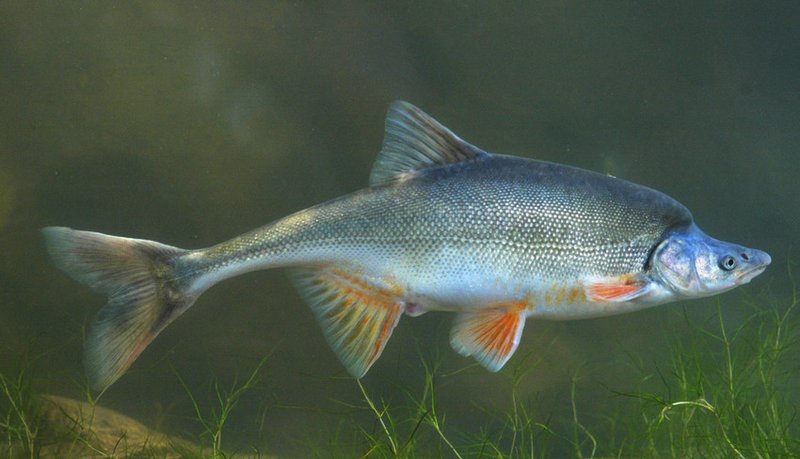
Record low water levels and warmer temperatures at Lake Powell increase the risk of nonnative fish passing through Glen Canyon Dam. This threatens native fish downstream, including the federally threatened humpback chub and razorback sucker and their protected habitats.
“The Grand Canyon is the last stronghold for humpback chub, and we can’t afford to lose this population,” said Taylor McKinnon, Southwest director at the Center. “Invasive fish have already decimated populations elsewhere in the Colorado River Basin. As Lake Powell declines, these imperiled fish need reliable, enforceable measures to ensure their survival and recovery in the Grand Canyon.”
The decline of Colorado River flows and basin-wide storage reduces options and increases risks for endangered fish and their habitat. As Lake Powell has fallen to historic low levels, more invasive fish can pass through Glen Canyon Dam and enter downstream critical habitat for native fish.
But the Bureau of Reclamation has continued to operate the dam without implementing key measures against invasive fish. That failure threatens decades of recovery for humpback chub, puts their last large population in the Grand Canyon at risk, and degrades critical habitat for this species and the razorback sucker.
A 2016 biological opinion for Glen Canyon Dam operations required the Bureau of Reclamation to “pursue means of preventing the passage of deleterious invasive non-native fish through Glen Canyon Dam.” A decade later, the agency has yet to put meaningful measures into place. Instead, it has studied potential solutions without taking action, while the threat to these fish has grown.
Today’s notice says the agency’s failure to act requires renewed Endangered Species Act consultation.
To curb the spread of nonnative fish, a 2024 supplement to the 2016 Glen Canyon Dam operating plan called for releasing cooler water downstream to stop their reproduction. Known as “cool-mix flows,” the measure redirects some water from the dam’s hydropower turbines through lower bypass tubes.
Although the Bureau of Reclamation has identified cool-mix flows as a proven way to limit reproduction of invasive fish downstream, the agency abandoned the measure this summer.
“This agency keeps falling back on trapping and killing invasive fish downstream instead of implementing measures that could prevent the problem in the first place,” said McKinnon. “That’s not a model for success. Invasive fish need to be stopped from passing through the dam. Preventative measures should be mandatory.”
To balance storage across the declining reservoirs, the bureau’s Post-2026 Colorado River Operations decision, finalized this year, targets a Lake Powell pool elevation just 20 feet above the minimum level needed to generate hydropower. Such low levels increase the risk of invasive fish passing through the dam.
While the 2026 biological opinion includes new measures to prevent and control nonnative fish invasion elsewhere in the Grand Canyon, those measures are largely voluntary with no guarantee they will be implemented.
“The Bureau of Reclamation should have begun planning for the climate-inevitable obsolescence of Glen Canyon Dam and Lake Powell a decade ago,” said McKinnon. “With that day only one or two dry winters away, there’s never been a greater need for a plan that grapples with what comes after Glen Canyon Dam while providing for the recovery of these threatened fish.”
The Center for Biological Diversity is a national, nonprofit conservation organization with more than 2 million members and online activists dedicated to the protection of endangered species and wild places.
