
For Immediate Release, April 28, 2026
|
Contact: |
Russ McSpadden, Center for Biological Diversity, (928) 310-6713, [email protected] |
Lawsuit Launched to Protect Imperiled Mexican Spotted Owls from Arizona Copper Mine Project
MAMMOTH, Ariz.— The Center for Biological Diversity, the San Carlos Apache Tribe and the Lower San Pedro Watershed Alliance today filed a notice of their intent to sue the U.S. Bureau of Land Management and the U.S. Fish and Wildlife Service over the Copper Creek Exploration Project near Mammoth, Arizona. The groups say the agencies violated the Endangered Species Act by allowing mining exploration drilling that threatens Mexican spotted owls and other imperiled wildlife.
“Federal officials were warned that Mexican spotted owls are in the area but pushed this mining project ahead anyway and skipped steps required by law,” said Russ McSpadden, a Southwest conservation advocate at the Center for Biological Diversity. “The Endangered Species Act is supposed to protect imperiled wildlife before damage is done, not after agencies brush aside the evidence and greenlight industrial drilling. This mining project is clearly illegal and it must be stopped.”
Today’s notice focuses on Mexican spotted owls, rare birds who depend on the rugged canyon and forest habitat of the Southwest. Federal data estimates there are roughly 1,300 known owl territories in the U.S., representing only a few thousand birds in small, fragmented and declining populations. Mexican spotted owls have been protected as threatened under the Endangered Species Act since 1993.
“The Lower San Pedro watershed is one of Arizona’s most important wildlife corridors, and this exploration project is pushing industrial disturbance into a landscape that is already under pressure,” said Melissa Crytzer Fry, chair for the Lower San Pedro Watershed Alliance. “When agencies ignore clear evidence and fail to follow the law, local communities are left to defend the river, the habitat and the species that make this place irreplaceable. We shared trail camera images with the BLM showing Mexican spotted owls in the area and were utterly ignored.”
The groups say the BLM approved the drilling project last summer despite receiving photographs showing Mexican spotted owls in the area. The agency still concluded the species was “not present” and failed to initiate consultation with the Fish and Wildlife Service, as required by the Endangered Species Act.
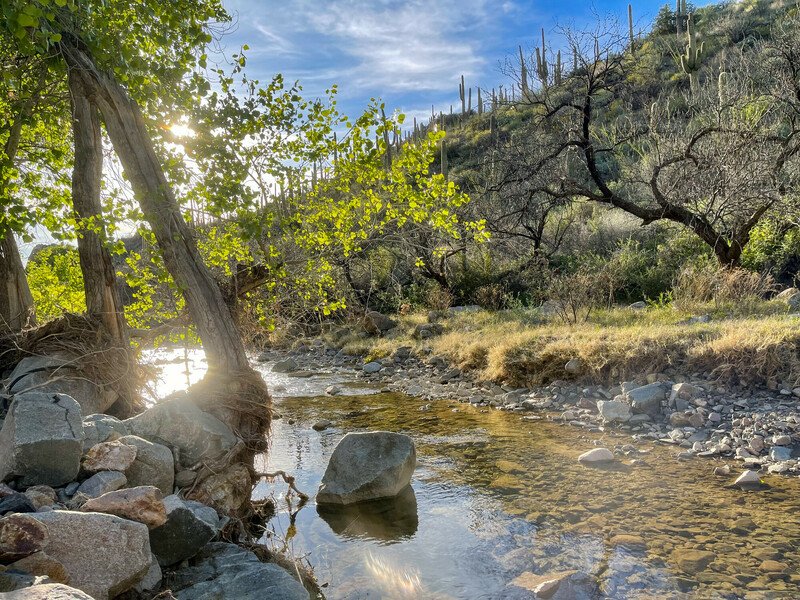
The Copper Creek project is already underway, bringing industrial drilling, bright lights, heavy noise, truck traffic, surface disturbance and groundwater pumping into sensitive habitat in and around Copper Creek Canyon, an important tributary of the Lower San Pedro River. These public lands and waterways support significant wildlife resources, including habitat for one of the Southwest’s most vulnerable owl species, and require management based on the best available science.
The notice letter also challenges the agencies’ analysis of harms to the threatened yellow-billed cuckoo, saying they failed to adequately assess how exploration-related groundwater pumping and noise could affect the bird’s habitat in the Lower San Pedro watershed. Cuckoo rely on healthy streams for habitat and prey during their nesting season.
The agencies failed to analyze how extensive helicopter surveying of the project area may harm both Mexican spotted owls and yellow-billed cuckoos. Aerial surveillance requires helicopters to fly extremely close to the ground, causing loud noise and surface disturbance that can be disruptive to wildlife.
The Center for Biological Diversity is a national, nonprofit conservation organization with more than 1.8 million members and online activists dedicated to the protection of endangered species and wild places.
The Lower San Pedro Watershed Alliance is an all-volunteer, landowner-based conservation organization with headquarters in Mammoth, Arizona. LSPWA’s mission is to protect the ecological integrity and associated indigenous cultural heritage of the lower San Pedro region of Arizona, primarily through voluntary and effective actions by local citizens. With more than 110 landholding members, the LSPWA resides and works within the watershed it seeks to protect from inappropriate exploitation of natural resources.
