
For Immediate Release, July 1, 2026
|
Contact: |
Danny Waltz, (303) 880-9136, [email protected] |
Lawsuit Launched Seeking Critical Habitat for Threatened Red Knots Along Eastern Shore
WASHINGTON— The Center for Biological Diversity notified the U.S. Fish and Wildlife Service today that it intends to sue the agency for failing to designate critical habitat for red knot shorebirds in a timely manner. Red knots stop along the length of the Eastern Seaboard during their annual migrations.
“The Fish and Wildlife Service’s delay in protecting the wild coastal areas that red knots call home is pushing them closer to extinction,” said Danny Waltz, a senior attorney at the Center. “The federal government must protect the delicate Eastern shores that the red knot needs to survive.”
Red knots were protected as threatened under the Endangered Species Act in 2014 but still have not received lifesaving protections for the places where they live.
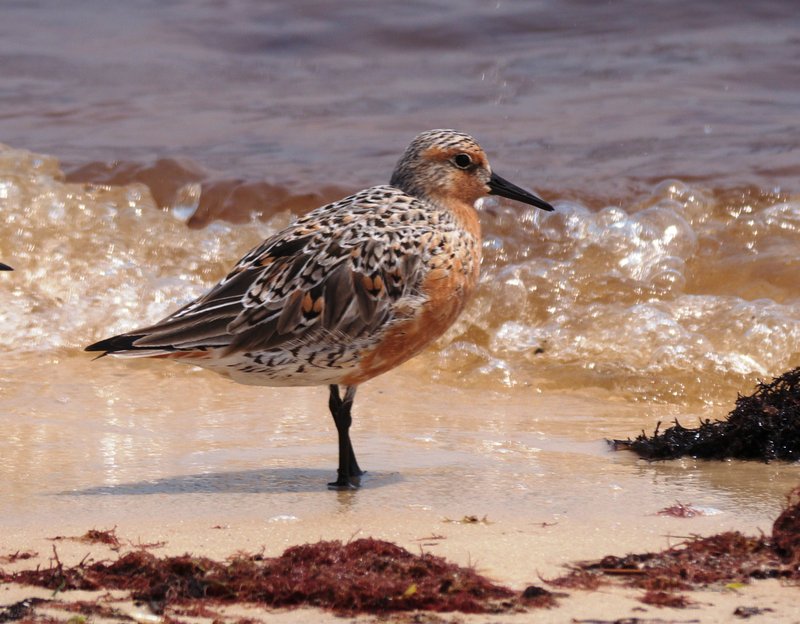
Red knots are shorebirds with rusty plumage known for making 19,000-mile round-trip migrations. Red knots migrate from as far south as the Tierra del Fuego archipelago at the southern tip of South America all the way to their breeding grounds in the Arctic, stopping in the United States along the way in both directions.
Red knots have suffered one of the steepest population declines among shorebirds in North America over the last four decades. Experts have calculated the species has seen a 94% decline in abundance. Red knots depend on coastal stopover sites along the Eastern Seaboard where they can rest and gorge on food like horseshoe crab eggs to fuel the remainder of their migratory journey.
The Service protected red knots as threatened nearly a decade after receiving a citizen petition to list the birds. The Service identified decline of Atlantic horseshoe crab populations as one of the more significant dangers to red knots.
However, the Service failed to designate and protect critical habitat as required by law. An April 2023 revision proposed to designate 683,405 acres of critical habitat but has not been finalized. The Service is now more than 10 years overdue on its red knot critical habitat designation deadline.
The designation of critical habitat is an important step in any species’ recovery. A Center study found that plants and animals with federally protected critical habitat are more than twice as likely to move toward recovery than species without it.
The Center for Biological Diversity is a national, nonprofit conservation organization with more than 1.8 million members and online activists dedicated to the protection of endangered species and wild places.
