
For Immediate Release, January 26, 2026
|
Contact: |
Lisa Belenky, Center for Biological Diversity, (415) 385-5694, [email protected] |
Federal Judge Protects Desert Tortoises From California Off-Road Vehicles
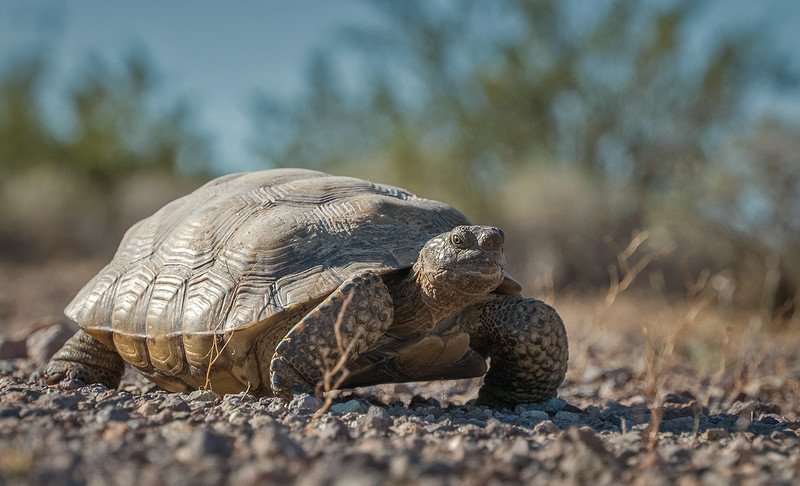
SAN FRANCISCO— A federal judge has prohibited off-road vehicle use in critical habitat for desert tortoises in California’s western Mojave Desert, protecting more than 2,200 miles of proposed routes across 1 million acres of conservation lands. The decision follows an earlier ruling that the Bureau of Land Management unlawfully approved a vast network of off-road vehicle routes.
“I’m grateful the judge recognized the need to take action to stop the steep decline of desert tortoises in the West Mojave,” said Lisa Belenky, a senior attorney at the Center for Biological Diversity. “Protecting these rare tortoises from extensive off-road vehicle use in their most important habitat will give them a chance to make a comeback. This is how the Endangered Species Act is supposed to work, protecting plants and animals from extinction by protecting the places they live.”
Friday’s ruling to protect conservation lands in the California Desert Conservation Area from off-road vehicles follows an October 2024 decision that the Bureau of Land Management violated the Federal Land Policy and Management Act by designating off-road vehicle routes on public lands without considering damage to resources.
The judge ruled that the BLM also violated the Endangered Species Act by failing to consider harm to threatened and endangered species and their critical habitats, including desert tortoises and Lane Mountain milkvetch.
The rulings are in response to a 2021 lawsuit filed by the Center for Biological Diversity, Sierra Club, Desert Survivors, California Native Plant Society, Defenders of Wildlife, and Desert Tortoise Council against the BLM, the Interior Department, and Fish and Wildlife Service over the 2019 West Mojave Route Network Project.
The BLM oversees off-road vehicle use on public lands in the western Mojave Desert. For more than 20 years the agency has failed to draft a management plan that protects the desert landscape and its inhabitants from the severe damage that off-road vehicles cause.
Under the West Mojave plan, the BLM adopted nearly 6,000 miles of dirt roads for off-road vehicle use — enough to go approximately one-quarter of the way around the Earth’s circumference — despite studies showing that closing areas to off-road vehicles would help threatened desert tortoises survive.
In addition, off roaders have created hundreds of new illegal roads in fragile habitat that is supposed to be protected for desert tortoises. The desert tortoise population has declined to unsustainable levels in the western Mojave Desert. Off roaders have access to thousands of miles of routes outside of tortoise critical habitat, as well as more than 270,000 acres still accessible to off-road vehicle use.
“Once again, the court found Bureau of Land Management’s West Mojave Route Network Plan violated the Endangered Species Act for failing to minimize impacts to the threatened desert tortoise and endangered Lane Mountain milkvetch,” said Jeff Aardahl, Defenders of Wildlife senior California representative. “With the BLM now required to close all off-highway vehicle routes in critical habitat areas, we can breathe a sigh of relief for these remarkable creatures. What’s more, is that 270,000 acres of public land in the Western Mojave will continue to be available for unlimited off-highway vehicle recreation; this is a win for everyone.”
“We are thrilled that Friday’s ruling includes increased protections for all of Lane Mountain milk-vetch’s critical habitat, which amounts to more than 14,000 acres,” said Nick Jensen, conservation program director at the California Native Plant Society. “By limiting the continued damage caused by OHV use this imperiled species will have the opportunity to recover and thrive.”
“The Desert Tortoise Council is encouraged to see that the courts recognize just how bad it has gotten for the desert tortoise,” said Ed LaRue of the Desert Tortoise Council. “The Bureau of Land Management has repeatedly favored off-highway vehicle access and use of desert tortoise critical habitat over the health and welfare of this imperiled species. The judge’s decision sends a clear message to the BLM and U.S. Fish and Wildlife Service that this level of off-highway vehicle use is not acceptable given their mandates to protect threatened and endangered species. We still want to see the BLM actually close routes designated to be closed and we’re eager to see how the BLM will implement the actions required by this ruling.”
The groups are represented by the Stanford Law Clinic and the Center for Biological Diversity.
The Center for Biological Diversity is a national, nonprofit conservation organization with more than 1.8 million members and online activists dedicated to the protection of endangered species and wild places.
