
For Immediate Release, August 6, 2026
|
Contact: |
Laiken Jordahl, (928) 525-4433, [email protected] |
Federal Contractors Begin Border Construction in Big Bend National Park
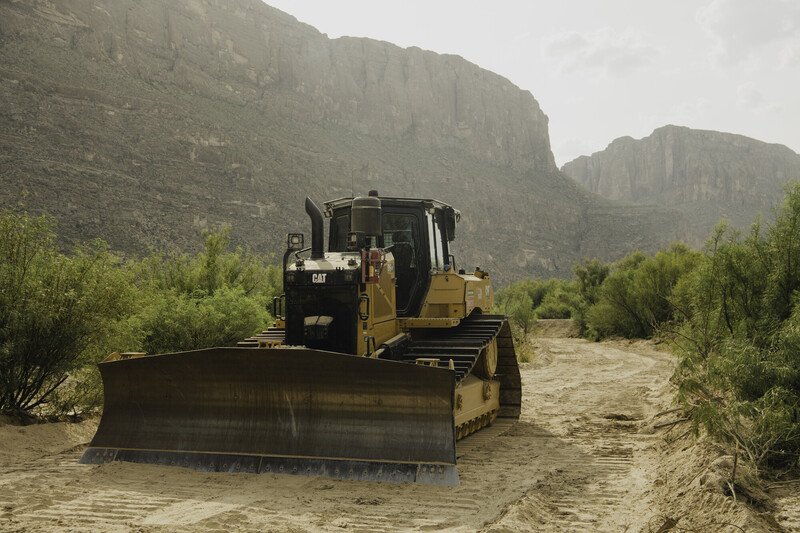
TERLINGUA, Texas— Bulldozers broke ground today on border barrier and road construction in Big Bend National Park amid widespread bipartisan opposition. Videos shared with the Center for Biological Diversity show contractors plowing through native vegetation along the Rio Grande’s riparian corridor, with the iconic Santa Elena Canyon visible in the background.
“This is the most heinous attack on an American national park in generations,” said Laiken Jordahl, national public lands advocate at the Center for Biological Diversity. “The administration is preparing to blast hundreds of miles of destructive roads through the wildest place left in Texas and cut off public access to the Rio Grande, all to enrich private contractors. Big Bend belongs to us all, and sacrificing it is a betrayal of every Texan and every American who believes our national parks should be protected. We won’t stop fighting this reckless assault on Big Bend National Park and America’s natural heritage until this destruction ends.”
Department of Homeland Security contractors have stockpiled heavy equipment across the Big Bend region, where staging yards have been cleared, worker camps built and water wells drilled.
According to Customs and Border Protection’s online map, the agency plans to build vehicle barriers and patrol roads across Big Bend National Park, including in rugged and remote areas such as Mariscal Mountain that would require extensive dynamite blasting. The plans also include building in remote walled canyons where no unauthorized vehicle crossings have been documented and where vehicles cannot access the border with Mexico.
In May the Department of Homeland Security awarded a $1.7 billion contract for border work through the national park. In June the department waived dozens of environmental laws — including the National Park Service Organic Act, Endangered Species Act and National Wild and Scenic Rivers Act — to authorize construction of border barriers, roads and lighting through Big Bend National Park. It was the first time in U.S. history that the federal government had waived such a broad set of environmental protections for construction inside a national park.
The Center sued the Department of Homeland Security, saying the waivers violated the Constitution by taking actions with vast economic and political consequences without congressional authorization. That case is ongoing.
Earlier this week, more than 140 outfitters, local businesses and recreation groups urged Texas leaders to protect public access to the Rio Grande and halt the project. They warned that closing river access and building permanent barriers and roads through the canyon corridor would put river outfitters out of business and devastate the regional economy.
Big Bend National Park drew 561,459 visitors in 2024, who spent an estimated $56.8 million in surrounding communities and generated $63.7 million in total economic output for the region. According to the Texas governor’s office, travelers to the Big Bend region contribute $4.6 billion in visitor spending each year, supporting thousands of jobs.
Opposition to the project spans the political spectrum. All five sheriffs along the Big Bend border region have opposed barrier construction, saying the region’s mountains, canyons, desert and Rio Grande already provide a formidable natural barrier. All 14 Texas border county judges have called for greater transparency and border security measures better suited to the terrain. Seven former Big Bend National Park superintendents have urged DHS to reject the waivers. Last week, the Texas land commissioner sent a cease-and-desist order to Customs and Border Protection and federal contractors for illegally clearing state land for border wall construction.
The Big Bend Sector covers 517 miles of the U.S.-Mexico border — more than a quarter of the entire U.S.-Mexico boundary. No unauthorized vehicle crossings have been documented in the region, which saw just 1.3% of total border apprehensions in 2025. Within Big Bend National Park, apprehensions accounted 0.045% of the national total. For decades the National Park Service and Customs and Border Protection have conducted border enforcement while preserving the park’s irreplaceable natural heritage and recreational opportunities.
The Center for Biological Diversity is a national, nonprofit conservation organization with more than 1.8 million members and online activists dedicated to the protection of endangered species and wild places.
