
For Immediate Release, July 13, 2026
|
Contact: |
Will Harlan, (828) 230-6818, [email protected] |
Diamondback Terrapins Advance Toward Endangered Species Act Protections
BALTIMORE, Md.— NOAA Fisheries announced today that diamondback terrapins may warrant listing under the Endangered Species Act. These turtles live primarily in coastal marshes from Massachusetts to Texas, where their populations have plummeted by 75% in the past 50 years. In many locations along the Atlantic and Gulf coasts, terrapin populations have been wiped out completely.
Diamondback terrapins will advance to the next stage of review to determine whether they warrant listing under the Endangered Species Act. But on Friday the Trump administration gutted Endangered Species Act regulations in an attempt to remove important habitat protections needed for terrapins and every other protected species.
“I’m thrilled that these beautiful and beloved turtles are one step closer to getting the protections they need,” said Will Harlan, a senior scientist at the Center for Biological Diversity. “Tens of thousands of terrapins are senselessly dying in crab traps and this decision brings us closer to requiring bycatch reduction devices, a simple solution that could save this species from extinction. But Trump’s recent move to gut habitat protection for all imperiled animals is a blow to these turtles and so many other creatures that need us to protect the places they live.”
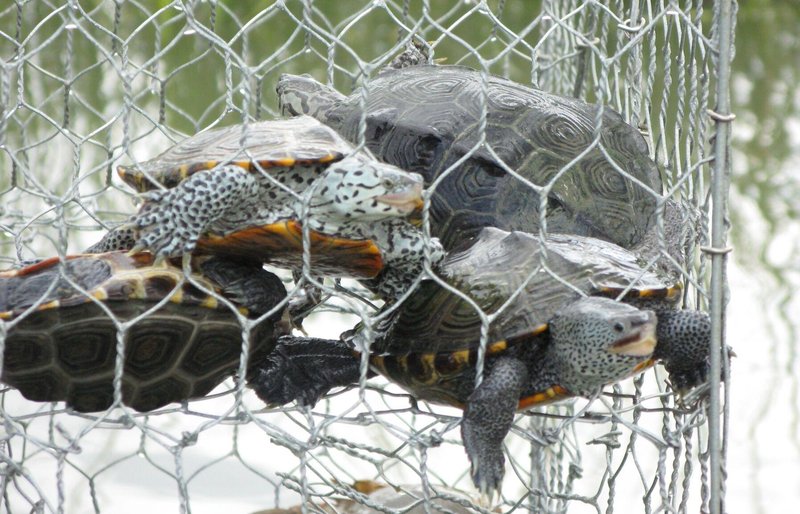
Drowning in crab traps is the leading cause of terrapin death. These traps are submerged cages with funneled entrances that catch both crabs and air-breathing terrapins. Around 3 million crab traps are deployed each year by recreational and commercial crabbers, which kill tens of thousands of diamondback terrapins annually.
In addition, between 25% and 50% of all crab traps are lost or abandoned annually in coastal waters. These derelict cages — called ghost traps — kill tens of thousands of additional terrapins every year. Researchers estimate that at least 80,000 terrapins are killed in active and abandoned crab traps each year.
Yet simple, proven solutions exist that could save terrapins. Bycatch reduction devices installed on crab traps have no negative effects on crab harvests, but they reduce diamondback terrapin deaths by 94%. Several states already require bycatch reduction devices.
Terrapins are also threatened by habitat loss from sea-level rise and development. They’ve already lost half of their original wetlands and are expected to lose up to 60% of their coastal marsh habitat by the end of the century.
As these animals travel farther in search of habitat, thousands of egg-bearing females are killed along roads each year. Additionally, pollution, poaching, predators, boat strikes and climate change also threaten them.
Diamondback terrapins have freckled bodies and distinct concentric diamond-shaped patterns on their shells. Adults can live up to 40 years, but only 1% of hatchlings survive to adulthood.
The Center and 20 partner organizations petitioned NOAA Fisheries in 2024 to list diamondback terrapins as endangered under the Endangered Species Act. The Sierra Club, Project Terrapin, Healthy Gulf and American Littoral Society are among the 20 organizations joining the Center’s petition to protect diamondback terrapins.
The habitat rule finalized July 10 by the Trump administration aims to remove nearly all habitat protections for endangered species.
“Terrapins are sinking toward extinction, and this decision to move toward listing them is an important step, but terrapins can’t survive without the very habitat protections that Trump is trying to take away,” said Harlan. “Terrapins and many other species will disappear forever if we don’t fight back.”
The Center for Biological Diversity is a national, nonprofit conservation organization with more than 1.8 million members and online activists dedicated to the protection of endangered species and wild places.
