
For Immediate Release, January 28, 2026
|
Contact: |
Jeff Miller, (510) 499-9185, [email protected] |
California Endangered Species Review Recommended for Desert Thrashers
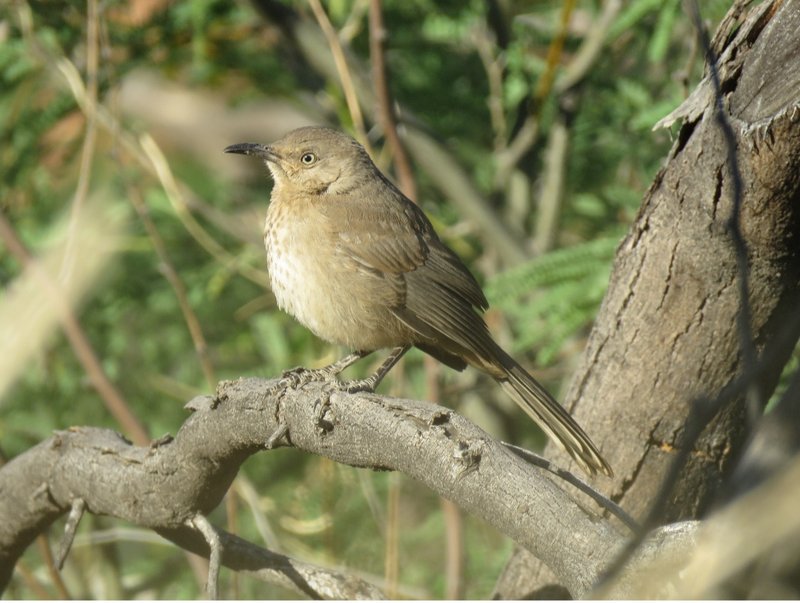
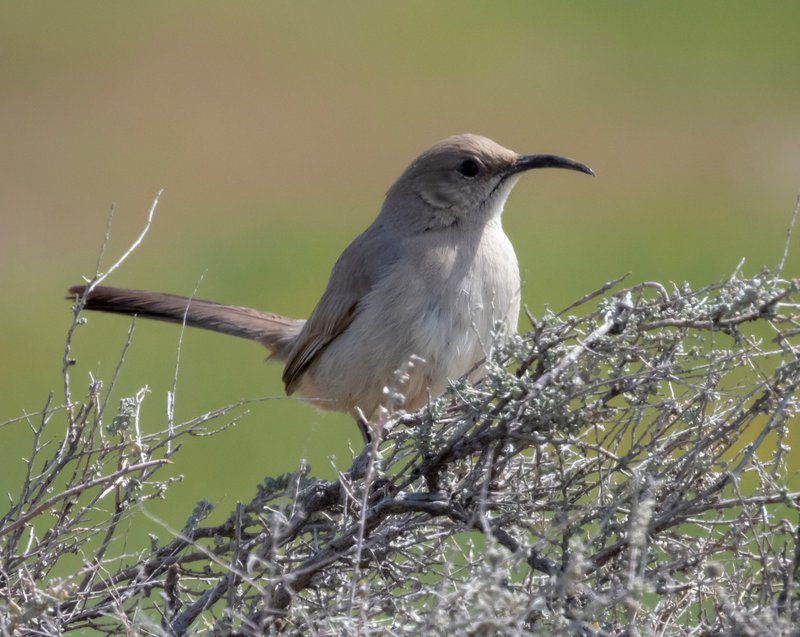
SACRAMENTO, Calif.— In response to Center for Biological Diversity petitions, the California Department of Fish and Wildlife this week recommended that the state’s wildlife commission review whether to protect two declining species of desert songbirds — Bendire’s thrasher and LeConte’s thrasher — under the California Endangered Species Act.
“This is an important step toward much-needed state protection for desert thrashers, who’re edging closer to extinction as their numbers rapidly decline,” said Jeff Miller, a senior conservation advocate at the Center. “These secretive songbirds have been hammered by reckless development and climate change, which have reduced their sparse habitats in Southern California deserts. The state’s recommendation could be a lifeline.”
The department found there was compelling evidence in the 2025 petitions to trigger a review for state protections for the two species of thrashers. If the California Fish and Game Commission accepts the petitions at its April meeting, it would start a review of both species and move them closer to state protection.
Over the past 50 years the number of Bendire’s thrashers has declined by 90% and LeConte’s thrashers have dropped by nearly 70% throughout their U.S. range.
Bendire’s thrasher and LeConte’s thrasher are native to arid lands of the southwestern United States and northwest Mexico. About 5% of the global population of Bendire’s thrasher, an estimated 4,400 birds, lives in the Sonoran and Mojave deserts in southeastern California. An estimated 37,000 LeConte’s thrashers, more than 80% of the global population, inhabit the Sonoran Desert and Mojave Desert portions of California as well as the southern San Joaquin Valley.
Significant areas of suitable thrasher habitat in southeastern California deserts and the southern San Joaquin Valley have been lost to sprawl development and agriculture. Habitat fragmentation and other threats such as invasive species, altered wildfire regimes, climate change, livestock grazing, off-road vehicles and mining are pushing both thrasher species to the brink.
LeConte’s thrashers inhabit some of the hottest, driest and most barren desert habitats within the region. They prefer sandy deserts with saltbush vegetation, where they forage on the ground for insects. The birds rarely fly, instead running on the ground with their tails cocked and scooting into brushy cover when threatened. LeConte’s thrashers are nicknamed the “gray ghost” because of their elusive nature and pale sandy plumage, which helps them blend into desert landscapes.
Bendire’s thrashers are also secretive and spend much of their time foraging on the ground for insects. Male thrashers of both species are most noticeable during breeding season, when they perch on shrubs to sing high-pitched, melodious songs. Bendire's thrashers nest in cholla cactus, mesquite trees, yuccas and Joshua trees. LeConte's thrashers nest primarily in cholla cactus and saltbush. Both thrasher species require large patches of flat land with desert scrub habitats and adequate prey to survive in their water-scarce environment.
Both Bendire’s and LeConte’s thrashers have been on the California Species of Special Concern list since 1978, but that designation has not been enough to halt their population decline.
In 2025 the Center petitioned for federal Endangered Species Act protections for both Bendire’s and LeConte’s thrashers. However, the Trump administration’s hostility to environmental protections and attempts to eviscerate the Act make it unlikely that federal protections for these species will move forward anytime soon.
Thrasher habitats on federal public lands are in jeopardy given Trump’s executive orders seeking to expand mining and energy extraction and efforts to reduce the size of national monuments in California. Earlier this month the Trump administration proposed opening more than 1 million acres of public lands in California, including habitats for desert thrashers, to oil and gas drilling and fracking.
The Center for Biological Diversity is a national, nonprofit conservation organization with more than 1.8 million members and online activists dedicated to the protection of endangered species and wild places.
