
For Immediate Release, February 19, 2026
|
Contact: |
Tierra Curry, Center for Biological Diversity, (928) 522-3681, [email protected] |
Brook Floater Gets Second Shot at Endangered Species Act Protection
Struggling Freshwater Mussels Found Across 16 States
WASHINGTON— In a legal victory for the Center for Biological Diversity, the U.S. Fish and Wildlife Service has agreed to reevaluate Endangered Species Act protections for brook floaters. These freshwater mussels were once widespread in rivers along the Atlantic Slope from Canada to Georgia.
The Center and allies first sought federal protection for the mussels in 2010, but in 2019 the first Trump administration failed to grant this much-needed safeguard. In April 2025 the Center challenged the denial, leading to this agreement to publish a new decision before September 2029. The Center was represented by the Abrams Environmental Law Clinic at the University of Chicago.
“Brook floaters are one of hundreds of species facing extinction because of the ongoing destruction of environmental protections by Trump and his cronies,” said Tierra Curry, endangered species co-director at the Center for Biological Diversity. “By slashing the Endangered Species Act and Clean Water Act, this administration is paving the way for rivers to catch on fire again and throwing the match themselves.”
Brook floaters need high water quality to survive and face a multitude of threats. Up to 60% of brook floater populations have already been wiped out, and only 15% of surviving populations are ranked as being healthy. Half of roughly 200 surviving populations are in poor condition.
“The Endangered Species Act remains one of the most effective tools for preventing extinction of imperiled species, so it is encouraging to see the brook floater getting another look,” said Conor Dorn, a third-year law student at the University of Chicago and a member of the Abram's Environmental Law Clinic. “Brook floaters and freshwater mussels in general are essential to healthy ecosystems — they improve our water quality and serve as key indicators of clean rivers. Protection will not only help this species recover, but will also benefit human communities who also depend on healthy waterways.”
The largest remaining populations are in Maine and North Carolina but some of their best habitats were devastated by Hurricane Helene. Mussels are sensitive to high water flows that dislodge them from stream bottoms. They’re also harmed by contaminants and loss of riparian forests that shade streams and filter runoff. They are further threatened by rising stream temperatures.
Background
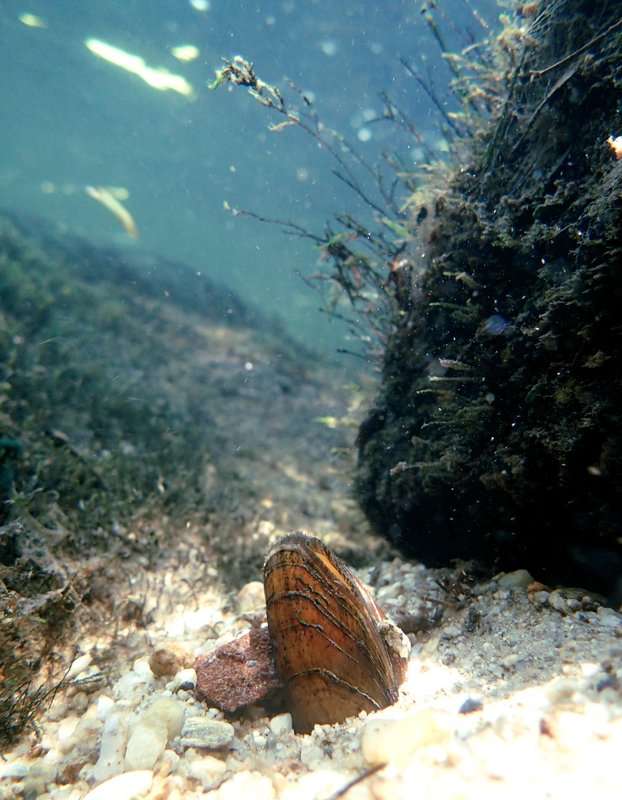
Brook floaters are 3 inches long with yellowish green shells that darken with age. The insides of their shells are blueish white with salmon and purple highlights. They have an orange “foot” that they use to propel themselves along river bottoms. They stick that foot out if they are removed from the water — an unusual behavior unique to this species since most mussels clamp shut if disturbed. They can live for 14 years.
Freshwater mollusks are the most endangered group of animals with 70% of species categorized as imperiled. More than 71 species of freshwater snails and 36 species of freshwater mussels have already been lost to extinction in North America.
Mussels filter water continually and remove bacteria and pollutants as they feed and breathe, creating healthier waters for aquatic communities and people. Their shells help stabilize river bottoms and provide living spaces for other animals.
Mussels rely on fish to complete their life cycle. Brook floaters extend their hooked larvae onto lines of mucus where they become entangled on fish gills and steal nutrients until the baby mussels grow enough to live on their own. Host fish for the brook floater include brook trout, longnose dace and slimy sculpins.
In 2025 not a single plant or animal was protected under the Endangered Species Act for the first time since 1981, and the Endangered Species Act listing budget was slashed to 2004 levels. The Center has successfully challenged numerous listing denials including for wolverines, hellbenders, Kirtland’s snakes, and Black Creek crayfish.
The Center for Biological Diversity is a national, nonprofit conservation organization with more than 1.8 million members and online activists dedicated to the protection of endangered species and wild places.
