
For Immediate Release, July 29, 2026
|
Contact: |
Russ McSpadden, (928) 310-6713, [email protected] |
Border Wall Construction Triggers Tree Sit to Save Ancient Arizona Cottonwood
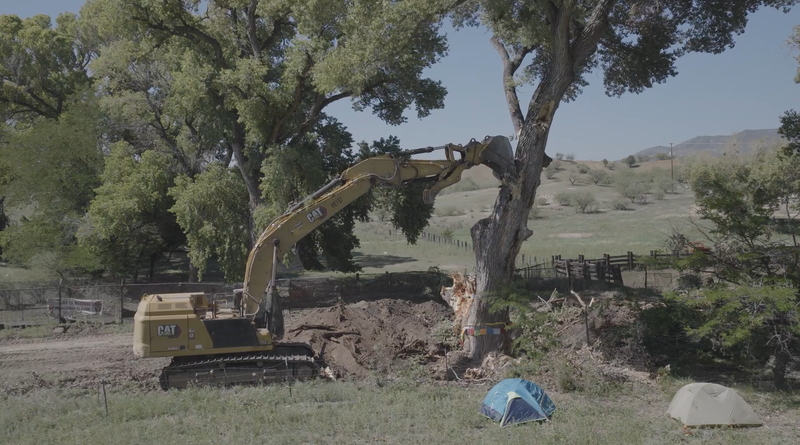
LOCHIEL, Ariz.— Protesters today climbed into an ancient cottonwood tree in Arizona’s San Rafael Valley to stop the Trump administration from cutting it down for construction of two parallel 30-foot-tall border walls.
The action comes after Department of Homeland Security contractors cut down three neighboring Fremont cottonwoods estimated to be 200 to 250 years old.
“Destroying these ancient cottonwoods is a death sentence for an entire ecosystem,” said Russ McSpadden, Southwest conservation advocate at the Center for Biological Diversity. “These magnificent cottonwoods survived centuries, nourishing wildlife through floods and drought, only to be bulldozed for the Trump administration’s disastrous border wall. The San Rafael Valley is one of the most biologically rich landscapes in North America. It’s both a refuge and crucial corridor for jaguars, ocelots, black bears, pronghorn and hundreds of bird species.”
Today’s action is believed to be the first tree sit aimed at stopping U.S. border wall construction.
The three cottonwoods cut down earlier this week stood along a rare stretch of the U.S.-Mexico border where mature trees once formed a transboundary canopy. The trees provided nesting habitat, shade and shelter within an increasingly scarce riparian ecosystem that supports hundreds of animal species. One protester was arrested Monday while trying to protect those trees and nesting migratory birds.
Federal officials said preconstruction surveys would be conducted during Arizona’s active nesting season, but observers at the site reported that no surveys for nesting migratory birds were completed before the trees were destroyed.
The area also contains prehistoric archaeological sites that preserve evidence of thousands of years of Indigenous presence in the borderlands. Ongoing construction threatens cultural resources that would be permanently lost if disturbed.
The Department of Homeland Security is constructing the border wall under authorities that waive dozens of the nation’s cornerstone environmental and cultural resource protection laws, allowing construction to proceed without reviews normally required under laws including the National Environmental Policy Act, the Endangered Species Act and the National Historic Preservation Act.
In a letter sent today to the Department of Homeland Security and U.S. Customs and Border Protection, the Center called for an immediate halt to construction in the Lochiel area. The letter urged the agencies to conduct comprehensive biological and cultural resource surveys, consult with Tribes with ancestral and cultural connections to the San Rafael Valley, protect the remaining ancient cottonwoods, and assess the ecological and cultural resources at risk.
Videos and photos for media use are available here.
The Center for Biological Diversity is a national, nonprofit conservation organization with more than 1.8 million members and online activists dedicated to the protection of endangered species and wild places.
