
For Immediate Release, March 3, 2026
|
Contact: |
Hannah Connor, (202) 681-1676, [email protected] |
Appeals Court Agrees EPA Failed to Protect Endangered Wildlife From Cadmium Water Pollution
SAN FRANCISCO— The 9th U.S. Circuit Court of Appeals today upheld a district court decision that the Environmental Protection Agency violated the Endangered Species Act in 2016 when it failed to assess harms to endangered species before nearly tripling the levels of the heavy metal cadmium allowed in U.S. waters.
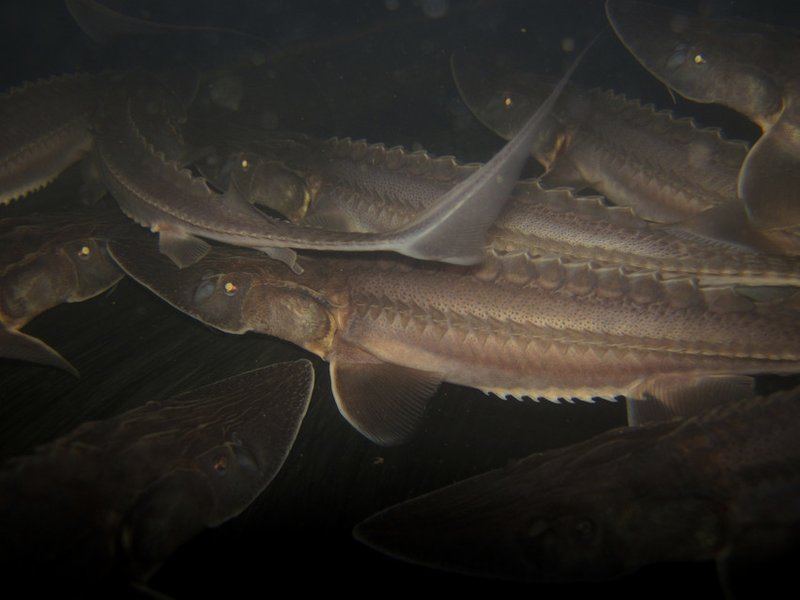
“This is a big victory that’ll make our waters safer for people across the country and protect Atlantic sturgeon, sea turtles and other wildlife from cadmium pollution,” said Hannah Connor, a senior attorney and environmental health deputy director at the Center. “It’s a landmark ruling that means the EPA can no longer ignore the big picture of toxic harm to wildlife, especially salmon, steelhead, orcas and other long-living and migratory species.”
Cadmium is a dangerous pollutant. It bioaccumulates and is a carcinogen toxic to wildlife and people at any level of exposure. Industrial and agricultural activities are the source of more than 90% of the cadmium found in surface waters. Coal combustion contributes approximately 40% of that pollution, while the production and use of phosphate fertilizers contributes about half.
“The appeals court agreed that the EPA has to stop ignoring the freshwater extinction crisis when it sets criteria for dangerous pollutants. It has to follow the Endangered Species Act,” said Connor. “If the EPA abides by this ruling and follows the law, it will dramatically improve the health of the country’s rivers and streams, along with the people, freshwater plants and animals who depend on them.”
Under the Clean Water Act, the EPA is required to set criteria that establish benchmarks for states, territories and Tribal nations to follow when they develop their water-quality standards, including for heavy metals like cadmium. The EPA must assess harm to endangered plants and animals when it approves state-based standards, but the lower court held that these consultations failed to consider the potential harm to wide-ranging species that cross multiple jurisdictions and fall under different standards.
In today’s ruling, the appeals court said the EPA was wrong to claim that the lower-court ruling would “open the floodgates.”
“The requirement that the agency activity ‘may affect’ listed species plays an important limiting role. Moreover, some agency activities may be too insubstantial to be ‘carried out’ in any meaningful sense,” wrote Judge Richard A. Paez. “But in researching, developing, and publishing nationwide recommendations for aquatic pollutant levels, which would foreseeably be adopted wholesale by many States, EPA undeniably ‘carried out’ an ‘agency action’ which ‘may affect’ listed species, requiring consultation with the (Fish and Wildlife) Services.”
Today’s ruling affirms a 2023 decision by U.S. District Court for the District of Arizona that vacated the EPA’s 2016 chronic freshwater cadmium criteria and left other more protective criteria in place after finding the agency acted unlawfully when it failed to comply with the Endangered Species Act in establishing those criteria. It also sent the EPA’s 2016 cadmium criteria back to the agency.
As the judge said in his ruling, “The bottom line here is that EPA does not have discretion to avoid its obligations under the ESA.”
The Center is represented by Richard Smith and Claire Tonry, with Smith & Lowney PLLC, and Center attorney Hannah Connor.
The Center for Biological Diversity is a national, nonprofit conservation organization with more than 1.8 million members and online activists dedicated to the protection of endangered species and wild places.
