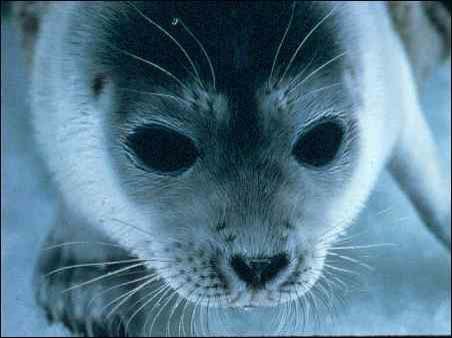
ANCHORAGE, Alaska— A federal appeals court today upheld the National Marine Fisheries Service’s designation of nearly 160 million acres of waters off Alaska’s Arctic coast as critical habitat for imperiled bearded and ringed seals.
Today’s decision offers ice seals the full protection of critical habitat they need to survive and legally deserve. The Center for Biological Diversity intervened in the case to defend the habitat designation against a challenge from the state of Alaska. The Center also pursued the appeal on its own after the Trump administration chose not to defend the designations.
“This is a great victory for these ice-dependent seals,” said Marlee Goska, Alaska staff attorney at the Center. “It’s just common sense that you can’t protect imperiled animals without protecting the places they live, and I’m glad the court agreed. This decision gives these Arctic seals some breathing room, but we still need to stop expanding oil and gas drilling in their habitat to provide these species and so many others a true shot at survival.”
The 9th U.S. Circuit Court of Appeals ruling reverses a 2024 lower court decision that struck down the habitat designation and reinstates the critical habitat designations for each seal species.
The Center first petitioned to protect both species under the Endangered Species Act in 2008, and the Fisheries Service listed them as threatened in 2012. Federal courts rejected separate oil-industry challenges to protections for bearded seals and ringed seals.
In upholding the critical habitat designations, the 9th Circuit held that they are consistent with the Endangered Species Act’s definition of occupied critical habitat and that the agency was not required to account for foreign nation conservation efforts in making the designations.
The court also held that the Fisheries Service acted within its discretion, and consistently with the Act, when it declined to consider excluding certain coastal areas for which Alaska and the North Slope Borough requested exclusions.
The court also rejected the state’s argument that the designations are unlawful because they are large. In doing so, the court recognized that “like the polar bears, the seal species ‘need room to roam’” and pointed to how the agency explained that the seals “rely on resources spread out over a wide area, including sea ice that is ‘dynamic’ by nature.”
Plants and animals with federally protected critical habitat are more than twice as likely to be moving toward recovery than species without it, a Center study found.
Bearded seals, known for their mustachioed appearance and elaborate courtship songs, give birth and nurse their pups on pack ice. The rapid loss of that ice jeopardizes their ability to rear their young and is lowering the abundance of food on their shallow foraging grounds in the Bering Sea.
Ringed seals, who are covered in dark spots surrounded by light gray rings, give birth in snow caves built on top of sea ice. Global warming is reducing the amount of snowpack there, causing caves to collapse and leaving pups vulnerable to death by freezing or from predators.
Critical habitat designation does not impact subsistence activities by Alaska Native communities.