LOS ANGELES— Standard carbon footprint estimates may be downplaying beef- and dairy-related climate emissions according to a peer-reviewed study published in Frontiers in Sustainable Food Systems.
“This analysis shows how beef-heavy menus are pushing us farther from the emissions reductions needed to slow climate change,” said Jennifer Molidor, senior food campaigner at the Center for Biological Diversity. “Understanding the real-world impacts of food emissions can help institutions and policymakers set more effective targets that meet the urgency of this moment.”
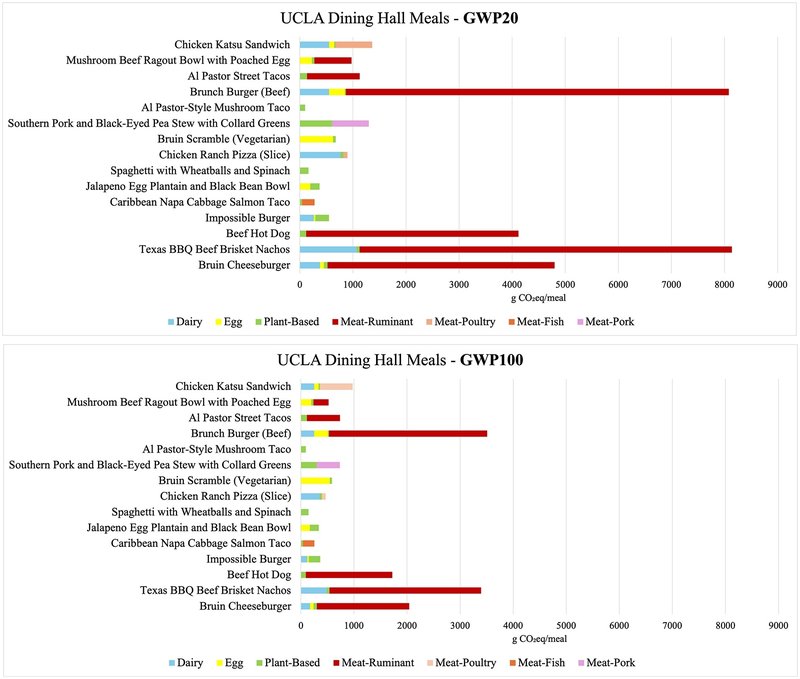
The new analysis from the University of California, Los Angeles, and the Center for Biological Diversity calculated the greenhouse gas emissions — particularly methane — for 16 food categories and 222 specific foods served in UCLA cafeterias using both long-term and short-term timeframes.
The analysis found beef and dairy more than twice as impactful to the climate when calculated over a 20-year period.
“The 100-year timeframe that's been in use was chosen arbitrarily, and it undercounts the contribution of methane compared to calculations using shorter timeframes of interest. This work allows us to better understand the benefits to be gained through changes in personal food choices and institutional food systems,” said senior author Jennifer Jay, Ph.D., with the Department of Civil and Environmental Engineering at the University of California, Los Angeles. “Climate change is affecting people and ecosystems all around the world, and we need to keep taking steps to reduce our emissions.”
The study is unique in using the Global Warming Potential metric over a 20-year period (GWP20) alongside the standard 100-year period (GWP100) to highlight how dietary impacts can change when observed over a shorter timeframe.
Because of methane’s short-term heat-trapping capacity, it is more than 80 times more potent than carbon over a 20-year period. Calculating its global warming potential over 20 years draws the impact of beef, lamb and dairy into sharper focus. Yet most policy reports continue to calculate emissions over 100 years without comparing it with the powerful short-term harm illuminated by GWP20.
Using GWP20 in addition to GWP100 to calculate food emissions could change whether a meal meets the threshold for carbon footprint labels and affect consumer choices. It could also have implications for agricultural production, commodity purchasing, subsidies, food policy and institutional procurement.
The University of California, Los Angeles, and the Center for Biological Diversity have also launched a Planetary Calculator that assesses the climate emissions, land and water impacts of food. The calculator demonstrates GWP100 and GWP20 to help individuals and institutions more accurately understand meals on an environmental scale.
Background
Food and agriculture contribute more than one-third of the greenhouse gases driving the climate emergency. According to the U.N. Food and Agriculture Organization, the United States is one of only a small handful of countries that eat more than 220 pounds of meat per person per year. Americans consume four times the global average in beef, driving a high climate footprint in methane emissions. Studies show that reducing beef consumption by 90% may be necessary to address the climate crisis.
The Intergovernmental Panel on Climate Change’s Sixth Assessment highlighted the urgent need to draw down methane emissions and address the immediate impacts of global greenhouse gases on climate, environment and human health.
Additional resources: Cows and Climate Change Factsheet.