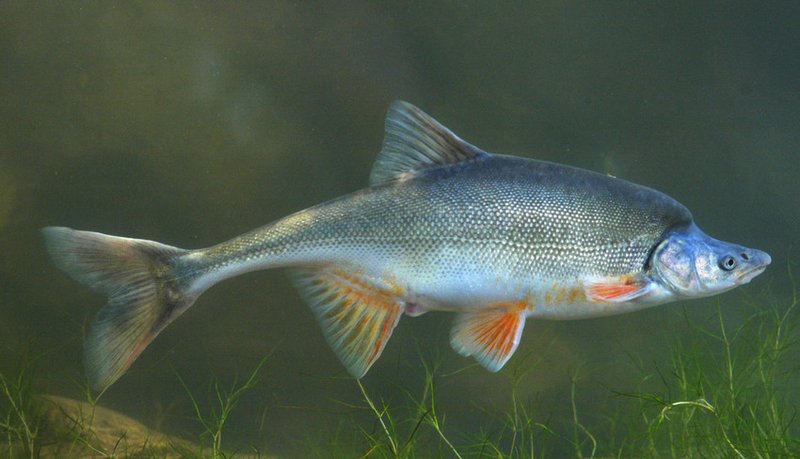
GRAND CANYON NATIONAL PARK, Ariz.— New projections released today by the Bureau of Reclamation show sharply declining Colorado River flows and plummeting reservoir levels at Lake Powell, conditions that increase threats from invasive species to endangered humpback chub populations in the Grand Canyon.
Record-breaking heat in March wiped out the basin’s snowpack, causing levels on Lake Powell to fall below 3,530 feet, the threshold at which invasive smallmouth bass are far more likely to pass through Glen Canyon Dam. This threatens decades of humpback chub recovery in the Grand Canyon. Bass invasions have harmed and eliminated humpback chub populations throughout the Upper Colorado River Basin.
“The Bureau of Reclamation is risking an unstoppable biological invasion that wipes out the world’s last source population of humpback chub in the Grand Canyon,” said Taylor McKinnon, Southwest director at the Center for Biological Diversity. “The agency must take urgent action to block invasive fish from passing through the dam before it’s too late.”
The 2016 biological opinion governing Glen Canyon Dam operations identified fish barriers or other structural modifications as key tools to prevent invasive fish from passing through the dam into the endangered species habitat downstream. However the Bureau of Reclamation has failed to install this essential infrastructure, instead issuing a report on potential barriers, which it says remain a “long-term” priority.
In the absence of barriers, managers have implemented measures to protect downstream endangered fish. These include catching and removing invasive fish and cool-mix flows that so far have prevented explosive smallmouth bass reproduction downstream.
Cool-mix flows involve releasing cold water drawn from deeper in the reservoir at 3,374 feet and reducing releases from power-producing penstocks at 3,470 feet, where water is warmer near the lake’s surface.
The hydropower industry is now urging the bureau to abandon those cool-mix flows. Without them, downstream river temperatures are projected to reach into the upper 70s later this year. Such conditions could trigger explosive growth of green sunfish, smallmouth bass and other warmwater invasive species that will likely overwhelm removal efforts.
“A choice to abandon cool-mix flows this year is a choice to abandon decades of humpback chub recovery in the Grand Canyon overall,” said McKinnon. “Grand Canyon National Park harbors the last large source population of humpback chub on Earth. It’s a crucial engine for recovery, and its loss risks losing the species as a whole. It’s also the last large Colorado River segment dominated by native instead of non-native fish, making it the river’s biodiversity stronghold, but this year could change that forever.”
Bureau officials have suggested that they will target Lake Powell elevations at 3,500 feet later this year to avoid “minimum power pool” at 3,490 feet, when the dam’s penstocks can no longer operate. This lake level will maximize the passage of invasive fish and warm water through the dam for months.
Federal agencies have no plan for managing the dam or protecting endangered fish at minimum power pool, when releases can only pass through river outlet works, which are bypass tubes for releasing water. Existing guidance discourages long-term releases from the river outlet works because of the risk of structural damage and failure.
“The Bureau of Reclamation should have been planning a decade ago for Glen Canyon Dam’s climate obsolescence,” said McKinnon. “That day is now upon us, and as shown with looming threats to endangered fish and downstream delivery obligations, they’ve no plan for operating at or near minimum power pool. The dam is a liability for people and endangered fish amidst Colorado River declines. It’s time to plan what comes next.”