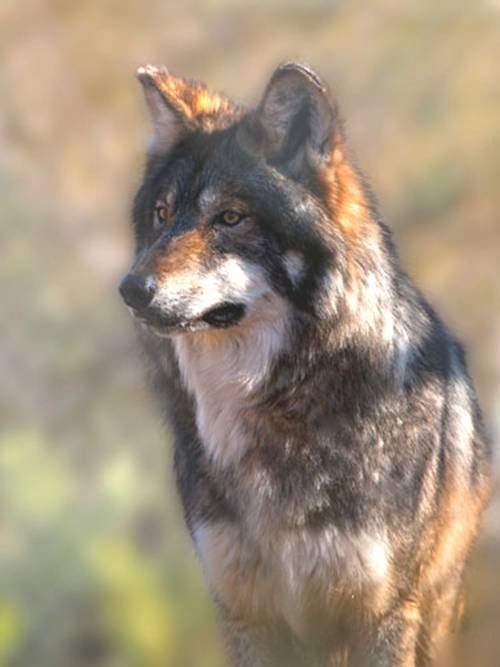
SILVER CITY, N.M.— The Center for Biological Diversity today released a report revealing declines in the endangered Mexican gray wolf’s genetic diversity and urging the U.S. Fish and Wildlife Service to adopt three management reforms in the Southwest to stanch the losses while it’s still possible.
The report shows that state and federal wildlife management agencies must resume releasing captive-born wolf families together into the wild, allow wolves to roam freely and stop shooting wolves because of conflicts with livestock.
“Even as Mexican wolves become less rare, our report shows that mismanagement has sadly drained the population of genetic diversity,” said Michael Robinson, a senior conservation advocate at the Center. “Wildlife agencies should stop shooting wolves and spare the few genetically distinct animals who remain. Mexican wolves deserve to be released together as families into the wild and allowed to roam free, for their sake and for ours.”
The 11-page report, An Hourglass Hidden in the Genome: How to Help the Endangered Mexican Gray Wolf Outrun Inbreeding, outlines why Mexican wolves found in the United States suffer from poor genetic health, with some individuals showing inbreeding defects such as fused toes. Metrics of the Mexican wolf’s genetic health are lower than when comprehensive tracking began in 2005 and even in recent years some benchmarks have continued to deteriorate.
The captive-breeding population, however, retains almost 40% more genetic diversity than the wild population. The report demonstrates why it’s imperative to replicate those additional genes in the wild population through releases of captive-born, well-bonded family packs.
Mexican wolves have also historically bred with northern gray wolves where their ranges overlapped, maintaining a healthy mix of genes. By ending the practice of capturing wolves who cross arbitrary politically-derived boundaries in Arizona and New Mexico, wildlife agencies could help reestablish these natural connections and facilitate a vital trickle of northern genes into the Mexican wolf population.
The report shows that agency removals of wolves for killing livestock are reducing genetic diversity. Since 2025 the U.S. Agriculture Department’s Wildlife Services killed three wolves with inordinate genetic value and the Arizona Game and Fish Department killed another. The report urges measures to prevent and deter conflicts between livestock and wolves, including never leaving livestock carcasses accessible to scavenging wolves.
“Political directives to reduce Mexican wolves’ federal protections won’t succeed until their genetic health improves,” said Robinson. “The Fish and Wildlife Service and partner agencies can avert the foreseeable tragedy of driving these wolves to extinction by prioritizing scientific management, not political convenience.”
President Trump issued an executive order Sept. 4 directing Interior Secretary Doug Burgum to decide within 90 days whether endangered Mexican wolves should be downlisted or delisted and, if so, to “begin the process of delisting or downlisting.” Today’s report explains that because federal law requires changes in a species’ legal status to be based on the best available science, Mexican wolves must remain on the endangered species list until their genetic diversity increases.