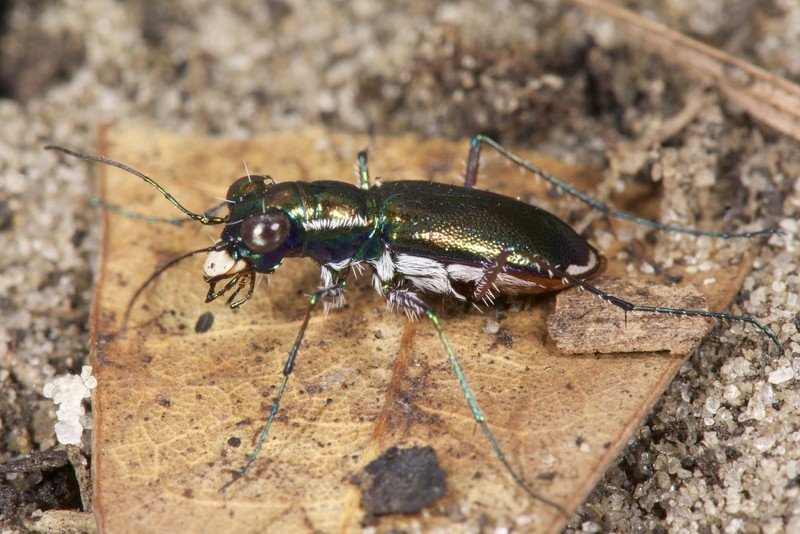
MIAMI— Miami-Dade County has announced a $925,000 donation delivered by conservation groups for the acquisition and management of critically endangered pine rocklands. The donation will help support the conservation of endangered Florida bonneted bats, Miami tiger beetles, Florida leafwing butterflies, brickell bushes and dozens more imperiled animals and plants in the county.
“Pine rocklands are integral to Miami-Dade’s natural heritage. Protecting them now is one of the most effective ways we can safeguard this rare ecosystem, while supporting future restoration,” said Lauren Jonaitis, executive director of Tropical Audubon Society. “This donation reflects our collective commitment to conserving these extraordinary forests and the remarkable plants and animals that depend on them. Together, we’re helping ensure that pine rocklands remain a vital part of the South Florida landscape for generations to come.”
Once spanning much of urban Miami-Dade County, pine rocklands have been destroyed and degraded by urban development, leaving behind only a small fraction of the more than 186,000 acres that historically covered the area. Many remaining forested areas in the county’s urban center are still at risk.
“We can give Miami’s most endangered creatures a fighting chance by restoring as many acres of pine rocklands as possible. This money will go a long way to help,” said Elise Bennett, Florida and Caribbean director at the Center for Biological Diversity. “This is a community effort. Whether you’re enchanted by jewel-like Miami tiger beetles or struck breathless at the sight of a Florida bonneted bat soaring across the night sky, there’s something you can do to help.”
“Hopefully this guarantees some pine rocklands and their related habitats here will be allowed to flourish for future generations to enjoy more than today’s uncontrolled urban sprawl,” said Al Sunshine, president of the Miami Pine Rocklands Coalition.
“The Miami-Dade pine rocklands, also known as the Miami Rock Ridge, once stretched from the current City of North Miami Beach to what is now Everglades National Park,” said Matthew Schwartz, executive director of South Florida Wildlands Association. “Because these uplands were naturally high and dry, they required no drainage canals and became the first areas developed in the county. Communities such as Coral Gables, Coconut Grove and Pinecrest now stand where vast expanses of wild, biologically rich pine rocklands once flourished. Our hope is that this donation will help acquire, protect and restore a portion of the roughly 2% of Miami-Dade County's original pine rockland habitat that remains today.”
The Center for Biological Diversity, Miami Pine Rocklands Association, South Florida Wildlands Association and the Tropical Audubon Society transferred the donation. The funds will go to Miami-Dade County’s Environmentally Endangered Lands Management Trust Fund and are expressly earmarked for the acquisition or management of pine rocklands in the county. The program manages more than 1,636 acres of pine rocklands and has more than 415 acres of pine rockland habitat currently on its acquisition list.
Pine rocklands are home to more than 20 species protected under the federal Endangered Species Act and dozens more rare and imperiled mammals, reptiles, insects and plants found nowhere else on Earth.
These forests are characterized by a tall canopy of South Florida slash pines growing in sandy soils and limestone, with a diverse low-growing understory of tropical and temperate flowers, herbs and shrubs. The forests are adapted to periodic natural fire, which helps support more than 400 native plants and dozens of imperiled species who rely on this beautiful habitat for their survival.
Florida’s pine rocklands were historically found across the Miami Rock Ridge, extending from north of downtown Miami west into Everglades National Park and south into the Florida Keys. Today less than 2% of pine rocklands remain in urban Miami-Dade County outside Everglades National Park. Pine rocklands also exist in the Keys, primarily on Big Pine Key, and in small patches in Big Cypress National Preserve.