MISSOULA, Mont.— The Center for Biological Diversity sued the U.S. Fish and Wildlife Service today for failing to designate critical habitat for wolverines in a timely manner.
Wolverines were protected as threatened under the Endangered Species Act in 2023, but still haven’t received protections for the places they live.
“The Fish and Wildlife Service’s delay in protecting the wild places that wolverines call home threatens to push them closer to extinction,” said Andrea Zaccardi, carnivore conservation legal director at the Center. “In the face of climate change, it’s crucial to protect the rugged, snowy areas that the wolverine needs to survive.”
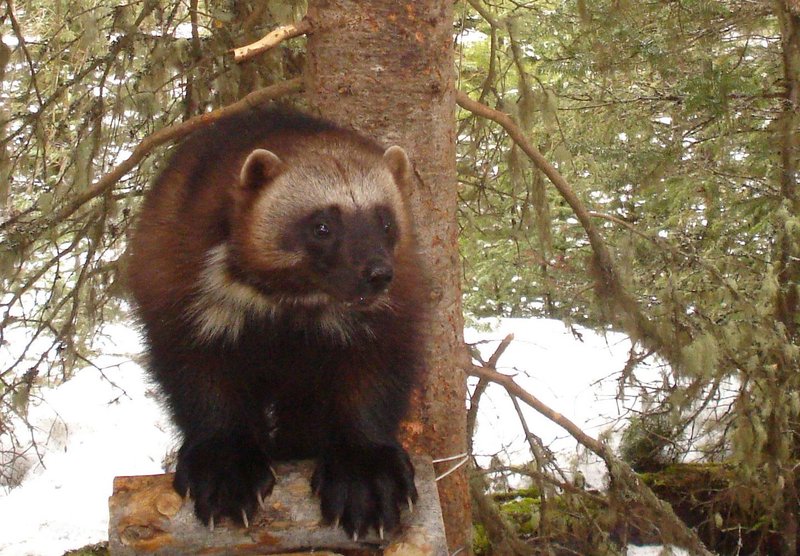
The wolverine is a medium-sized carnivore and the largest of the Mustelidae family that also includes fishers, weasels, mink and martens. Although known for their ferocity, wolverines have been described by the Service as curious, intelligent, playful and cautious animals. They’re adapted to travel long distances, maintain large territories in remote areas and rely on areas of persistent spring snowpack for denning.
There may be just over 300 individual wolverines left in the lower 48 states, according to recent data.
In North America wolverines were historically found in much of the northern portion of the continent, extending southwards into the Great Lakes region, the northern Rocky Mountains and the Cascade Mountains of the United States. Historical records indicate their range extended as far south as the southern Rocky Mountains.
During the 1800s and early 1900s, wolverine were largely wiped out in much of the contiguous United States by trapping and poisoning.
Following regulation of trapping, the wolverine population rebounded slightly. Currently, wolverines are known to reproduce in the northern Rocky Mountains in Idaho, Montana, and Wyoming, and the Cascade Mountains of Washington. In recent years they have been spotted as far west as the Oregon Coast.
After multiple rounds of litigation by the Center and other conservation organizations, in November 2023 the Fish and Wildlife Service finally protected the North American wolverine in the contiguous United States as a threatened species under the Endangered Species Act. The Service identified the effects of climate change like warming temperatures and decreasing snowpack as the most significant dangers to the wolverine.
Upon the wolverine’s listing, the Service found that a designation of critical habitat was not yet determinable. That finding provided the Service with one additional year to designate critical habitat. The Service has failed to meet its November 2024 deadline.
The designation of critical habitat is an important step in the wolverine’s recovery. A Center study found that plants and animals with federally protected critical habitat are more than twice as likely to move toward recovery than species without it.
Today’s lawsuit was filed in the federal U.S. District Court of Montana.