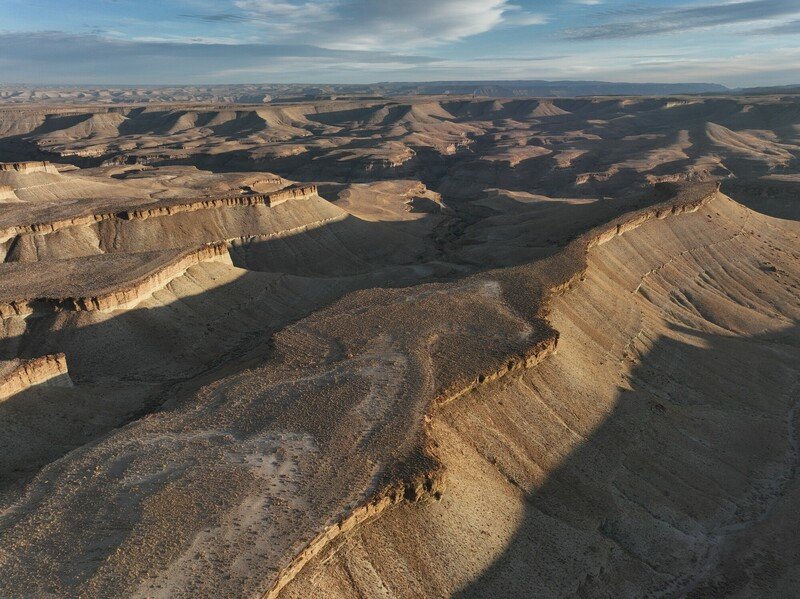
SALT LAKE CITY— The Center for Biological Diversity today filed a notice of intent to sue the Trump administration’s Bureau of Land Management for quietly approving a hydrocarbon highway through Utah’s scenic, culturally and historically significant Gate Canyon in the West Tavaputs Plateau region of eastern Utah.
“This lawsuit targets the Trump administration’s disgraceful plan to transform a quiet, meandering backcountry road into a highway clogged with speeding oil tankers,” said Deeda Seed, senior Utah campaigner at the Center. “Blasting through Gate Canyon’s walls threatens the area’s iconic rock art and will be a disaster for nearby animals, including threatened Mexican spotted owls. We’re prepared to go to court to protect this irreplaceable cultural treasure and the animals that call it home.”
Gate Canyon feeds into Nine Mile Canyon — a world-renowned archaeological area that contains more than 10,000 unique, irreplaceable cultural, historical and archaeological resources.
The Southern Utah Wilderness Alliance filed a similar 60-day notice in April. Both notices say the BLM and the U.S. Fish and Wildlife Service violated the Endangered Species Act by not considering the project’s threats to Mexican spotted owls, despite the fact that the BLM identified the cliffs near the proposed blasting areas as potential owl habitat.
“The BLM knew that prior versions of this same proposal were extremely controversial and faced fierce public headwinds,” said Landon Newell, staff attorney with the Southern Utah Wilderness Alliance. “This time around, instead of facing the public, they hid their decision from scrutiny, rushing their analysis and approval, all under the guise of Trump’s “Energy Dominance” agenda.”
The project, known as the “Wells Draw Road Amendment – Gate Canyon,” was proposed by Duchesne County and approved by the BLM on April 28, 2026. It involves the blasting and destruction of cliff walls and other large rock features in Gate Canyon to straighten and pave a 5.3-mile dirt road that winds through the scenic canyon as it climbs from Nine Mile Canyon to the Badland Cliffs region of the southern Uinta Basin.
The project is intended to provide an alternative route for transporting oil out of the Uinta Basin. The road would accommodate 70-foot oil tanker trucks traveling between the oil fields and transloading facilities in Carbon County, Utah. It is estimated that once the destruction of Gate Canyon is complete as many as 1,000 vehicles could pass through each day — the equivalent of “[a] tanker truck every 7 minutes,” according to news reports.
This marks the third attempt by the county to destroy Gate Canyon. In 2015 and 2022, the BLM received similar applications to realign Gate Canyon Road, but those projects were abandoned amid significant public opposition.
The BLM quietly posted the latest iteration of the project in March 2026 without issuing public notice or opening a formal comment period. After learning of the project, conservation groups requested that the BLM allow for public participation in the decision-making process. The agency denied those requests and quickly approved the project in April.
Nine Mile Canyon is often referred to as “the world’s longest art gallery” because of its extensive collection of rock art and archeological sites. Previous BLM studies describe the area as containing “a significant and high density of historic, cultural, and archeological sites joined together in several overlapping historic landscapes” and saying it “is known to contain the country’s highest concentration of rock art panels, remnants of the prehistoric Archaic, Freemont, and Ute cultures . . . The rock structural remains of Fremont homes, granaries, and ‘forts’ are more visible in Nine Mile Canyon than almost anywhere in the Fremont cultural area.”