ANCHORAGE, Alaska— The Native Village of Hooper Bay, the Native Village of Paimiut, Chevak Native Village, and the Center for Biological Diversity sued the Trump administration today over a permit that allows construction of a road through Alaska’s Izembek National Wildlife Refuge.
“Climate change is already making the geese and other birds more and more scarce. With a road through Izembek, that could get worse,” said Chief Edgar Tall Sr. of the Native Village of Hooper Bay. “My community depends on subsistence hunting to eat, and I’m passing that knowledge down to my kids and I hope they can give it to their grandkids. So much about how we live has already changed, and we need to take care of the wildlife before it disappears.”
Today’s lawsuit, filed in the U.S. District Court in Anchorage, asserts that the U.S. Army Corps and the U.S. Fish and Wildlife Service violated the Clean Water Act, the Endangered Species Act, the Alaska National Interest Lands Act, and the National Environmental Policy Act when the Corps gave Alaska officials a permit to build a road through Izembek.
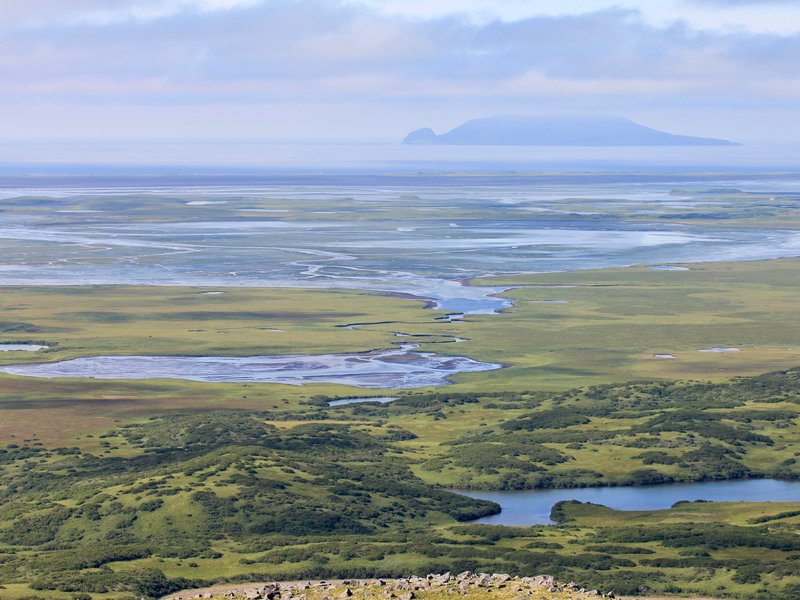
The planned road would pass through the center of Izembek’s wilderness lands, disrupting and degrading vital and irreplaceable wildlife and migratory bird habitat.
“When leaders from our Tribal communities traveled from the Yukon-Kuskokwim Delta to Anchorage in March, we made it explicitly clear to the Army Corps that bulldozing a road through Izembek would threaten our subsistence way of life,” said Angutekaraq Estelle Thomson of the Native Village of Paimiut. “By ignoring our Tribal resolutions and issuing this permit, the administration forced our hand. We are taking legal action to enforce federal law because our protection of species we rely on for food security, our millennia-old relationships with migratory birds and our sovereignty cannot be swept aside for short-sighted development deals. Izembek provides a globally unrivaled ecosystem that serves as a vital staging ground. Disturbing the land to build a road puts that delicate ecosystem at risk in a time of unprecedented change in climate and policy. No infrastructure deal should be placed above Izembek’s value.”
To facilitate the road, the Trump administration entered into a land exchange in 2025, swapping away a 500-acre corridor bisecting the narrow Izembek isthmus for 1,739 acres of King Cove Corporation lands. That land exchange is the subject of ongoing litigation.
Izembek is a globally important stopover for millions of migratory birds, including Pacific black brant, emperor geese and endangered Steller’s eiders. Pacific brant and emperor geese migrate on to the Yukon-Kuskokwim Delta, where they are an essential subsistence resource for the Native Villages.
In March leaders from the three Native Villages traveled from the Y-K Delta to Anchorage to engage in consultation with Army Corps Alaska District leadership. The Native Villages asked the Army Corps to deny the state’s permit application because of the harm the road will cause to the migratory birds they rely on for their subsistence way of life. The Native Villages and many other Tribal entities in the Yukon-Kuskokwim Delta region and across the state have also passed resolutions opposing the road.
“It’s disturbing to see the Trump administration ignoring the law in pursuit of a destructive road through the heart of Izembek’s fragile isthmus,” said Marlee Goska, Alaska attorney at the Center for Biological Diversity. “Experts have repeatedly told us how devastating this road will be for the migratory birds that Y-K Delta communities rely on for subsistence and for other animals that desperately need Izembek’s intact ecosystem. Congress specifically protected Izembek from exactly this type of destruction, and this attempted end run around the law sets a dangerous precedent for all federally protected lands in Alaska.”
In addition to being an essential stopover for millions of migratory birds, Izembek is home to grizzly bears, caribou, salmon, sea otters and walrus. It contains some of the largest eelgrass beds in the world. Prior administrations repeatedly concluded that bulldozing a road through Izembek would cause permanent harm to vital wildlife habitat.
See the full statement from the Native Village of Paimiut here.