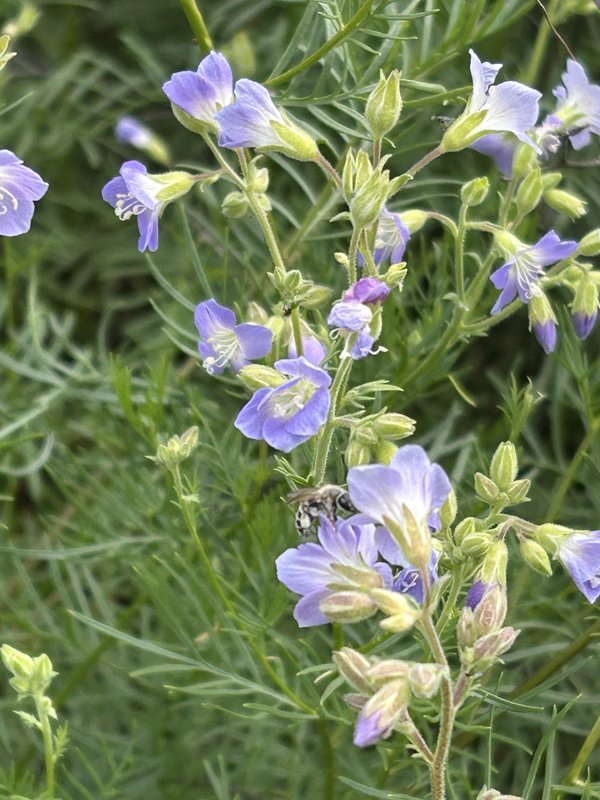
SEATTLE— The Center for Biological Diversity petitioned the U.S. Fish and Wildlife Service today to protect Washington Jacob’s ladder under the Endangered Species Act. These flowering plants are only found east of the Cascades summit in Washington state and are easily recognized by their small purplish-blue flowers and strong scent.
“These beautiful, long-lived plants need the same groundwater and healthy floodplains that people have dramatically altered across the high deserts of central and eastern Washington,” said Gwendolyn McManus, a scientist at the Center. “Many populations are now in decline, and some have already been lost. The Fish and Wildlife Service needs to protect this spectacular, irreplaceable species before it’s too late.”
Without healthy floodplains, Washington Jacob’s ladder cannot reproduce. When streams flood, they deposit moisture and nutrient-rich soil across a wide area, providing a perfect nursery habitat for seeds. Unfortunately, many of the streams in central and eastern Washington have been altered by people and are now cut so deep into the earth that they never flood.
In addition, agricultural demand for groundwater is so intense that water table levels have declined by hundreds of feet in some locations. Deep-rooted adult plants can still reach water, but these “zombie populations” are not healthy because they’re not producing offspring. When the mature plants die, the whole population will be lost.
Other threats to Washington Jacob’s ladder include cattle grazing, which can lead to trampled earth and plants, and invasive weeds like cheatgrass and Russian knapweed, which cover all available bare ground and prevent seeds from germinating. Climate change and wildfire suppression are also creating long-term changes to the environment where this plant once thrived.
“Washington Jacob’s ladder provides an abundant pollen and nectar source for native populations of hover flies and ground-nesting bees,” said Mark Darrach, a botanist who conducted surveys for this species in 2025. “Loss of this beautiful plant will have far-reaching impacts on pollinator populations in a landscape where their resources are already in steep decline.”
The Pacific Northwest is home to nearly 200 rare and imperiled plant species, fewer than 10% of which are protected under the Endangered Species Act. The northwestern United States is predicted to become a plant extinction hotspot by the end of the century, placing even more of this region’s beautiful flora at risk. The Center has petitioned to list more than a dozen Pacific Northwest native plants under the Act.