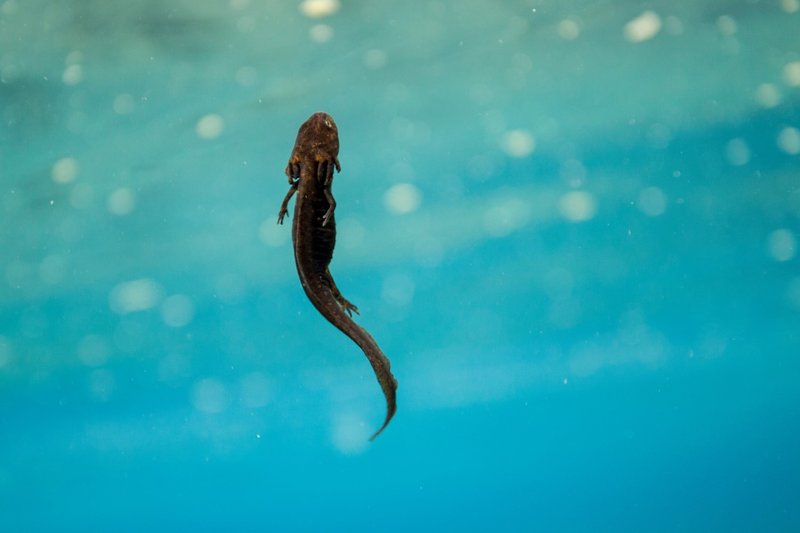
PORTLAND, Ore.— In response to a petition and litigation by the Center for Biological Diversity the U.S. Fish and Wildlife Service today proposed to protect the Crater Lake newt as an endangered species. The newts live only in Oregon’s Crater Lake and are on the brink of extinction because of introduced crayfish and climate change.
“It shouldn’t have taken a lawsuit for Crater Lake newts to get the lifesaving protections they so desperately need,” said Chelsea Stewart-Fusek, an endangered species attorney at the Center. “These special little amphibians are a critical part of Crater Lake’s ecosystem and I really hope it’s not too late for them.”
Recent snorkel surveys conducted by Crater Lake National Park scientists found zero wild newts. Surveys in 2025 detected just four newts, down from 35 newts found in 2023.
Crater Lake newts, also known as Mazama newts, are a subspecies of the more widely distributed rough-skinned newt. While the rough-skinned newt produces a potent neurotoxin to deter predators, Crater Lake newts are adapted to being at the top of the lake’s aquatic food chain and lack any predator defense mechanisms.
In the late 1800s fish were introduced to Crater Lake to attract visitors and in 1915 park managers introduced signal crayfish as a food source for the fish. Both fish and crayfish prey upon Crater Lake newts, but it wasn’t until lake temperatures warmed because of climate change that the number of crayfish exploded, decimating newt populations. Crayfish also compete with newts for food because both species feed on invertebrates and reduced numbers of invertebrates cause algae growth that threatens the lake’s famous clarity.
Following the Center’s legal petition in 2023 the Service announced that the Crater Lake newt may qualify for protection under the Endangered Species Act. After the agency missed the deadline for making a decision about whether to protect the newt, the Center sued. Today’s proposal is the result of a legal agreement signed in May.
The Service has one year to finalize protections for the newt. Once the listing is finalized, federal funding could help with crayfish removal and contribute to ongoing captive breeding efforts.
“The Endangered Species Act is incredibly effective at protecting imperiled plants and animals but when species don’t recover it’s because they’re listed too late,” said Stewart-Fusek. “We’ll continue to fight for Crater Lake newts to ensure they receive protection as quickly as possible.”
The Trump administration has protected the fewest species of any administration since the Endangered Species Act became law and has missed dozens of deadlines for making decisions about which species require protections.