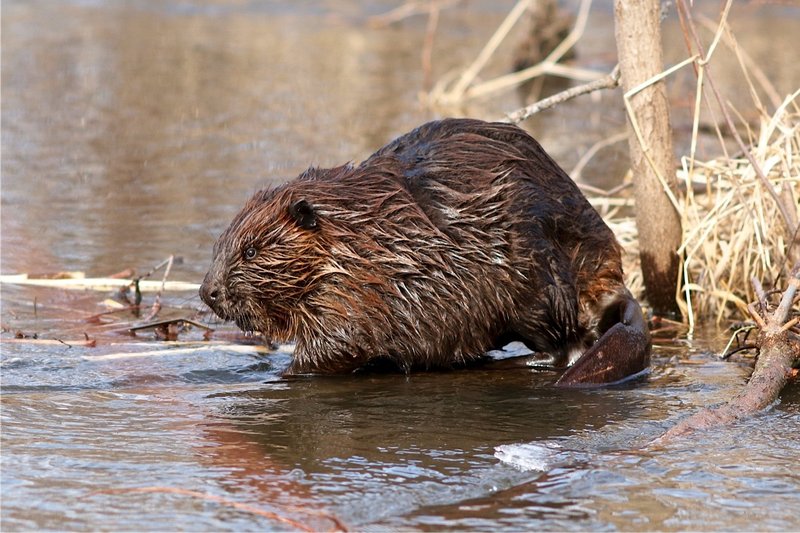
DENVER— Conservation groups joined state Rep. Mandy Lindsay, Rep. Elizabeth Velasco, Sen. Cathy Kipp and Sen. Lisa Cutter Thursday to introduce a first-of-its-kind bill to protect beavers on public lands and support their proven role in building drought and wildfire resilience. The bill is especially important as historically low snowpack heightens drought and wildfire danger across Colorado.
“With the snowpack shrinking and fire seasons getting longer, it’s reckless to treat beavers like targets instead of allies,” said Samantha Miller, a senior carnivore campaigner at the Center for Biological Diversity. “Protecting beavers on public lands helps these industrious animals to survive while reducing wildfire risk and strengthening drought resilience.”
Wildfire has cost Coloradans more than $3.1 billion since 2020, with the state spending an additional $30 million to $115 million per year for wildfire management and suppression.
House Bill 26-1323 would prohibit killing beavers on public lands while preserving flexibility to remove beavers when necessary to address conflicts involving infrastructure, agriculture or other management needs.
Beavers’ wellbeing depends on having stable populations. Protecting them is essential so the animals can naturally recolonize suitable habitat, creating healthier wild places and benefitting all Coloradans. The bill aligns with Colorado Parks and Wildlife’s ongoing beaver management planning.
“Wildfires have become more destructive and expensive throughout Colorado, and we must do everything we can to address the situation especially given another drought year,” said Jen Clanahan, executive director of Colorado Nature League. “The current number of beavers in Colorado is a fraction of the historic number and they have struggled to fully recover. Beavers are incredible environmental architects that can help us, if we only let them.”
“We need to wake up to the critical role that beavers play in mitigating wildfire and drought,” said Lindsay Larris, strategic partnerships director at WildEarth Guardians. “While Colorado Parks and Wildlife has developed strategies to help beavers, they don't go far enough. We can no longer afford to treat these climate allies as pelts and targets — this prohibition on recreational and commercial take of beavers makes sense.”
Streams and streambanks where beavers are active act as natural fire breaks, staying greener and burning at lower severity than similar waterways without beavers. During three Rocky Mountain megafires in 2020, areas with beaver dams burned less severely than comparable corridors without dams, even when comparing places that were equally good habitat for beavers.
“When we prioritize non-lethal approaches and thoughtful stewardship of beaver populations on public lands, it delivers profound benefits for people and wildlife alike,” said Aubyn Royall, Colorado state director at Humane World. “Beavers have the extraordinary ability to restore stream ecosystems, which in turn supports diverse habitats for rare and sensitive species and resilience to drought and a changing climate.”
“Our public lands desperately need beavers to help with wildfire resilience and to mitigate the climate crisis,” said Delaney Rudy, Colorado director for the Western Watersheds Project. “Beavers work for free to create wetlands that help slow and contain fires, provide essential wildlife habitat and store water. This bill recognizes their important benefits to Colorado’s wild places.”
Beaver ponds and structures also reduce water pollution after fires. By slowing water and trapping sediment and ash, beaver ponds play a vital role in reducing the downstream pollution that drives expensive post-fire cleanup and threatens drinking water.
“Beavers are a keystone species, creating ponds and wetlands that provide homes for a large array of other animals and plants,” said Johanna Hamburger, director and senior attorney of the Animal Welfare Institute's terrestrial wildlife program. “Many species of invertebrates, fish, amphibians, reptiles, birds and mammals are attracted to these beaver-created areas, which serve not only as year-round habitat, but as a safe refuge for animals fleeing wildfires.”
“Allowing beavers to thrive in their native watersheds is a win-win for Coloradans and wildlife,” said Michael Saul, Rockies and plains program director at Defenders of Wildlife. “Beavers, nature’s ecosystem’s engineers, support not only abundant wildlife and wetlands, but also help people to mitigate drought and wildfire risks. This bill is a step toward recognizing the value beavers provide and moving towards successful human-beaver coexistence in Colorado.”
“Beavers play a crucial role in regulating Colorado’s water supply by building dams that retain water across the landscape. These dams help keep surrounding vegetation moist, which can significantly reduce the risk of wildfires,” said Patricia McLaughlin, chair of Sierra Club’s Colorado legislative committee. “By restoring beaver populations, Colorado can strengthen this natural defense against wildfire threats. This bill prohibits recreational or commercial taking of beavers on public lands, except in specific instances where beavers may threaten infrastructure or public safety. These targeted exceptions ensure that beavers can continue to support Colorado’s wildfire resiliency strategy while addressing legitimate management concerns.”