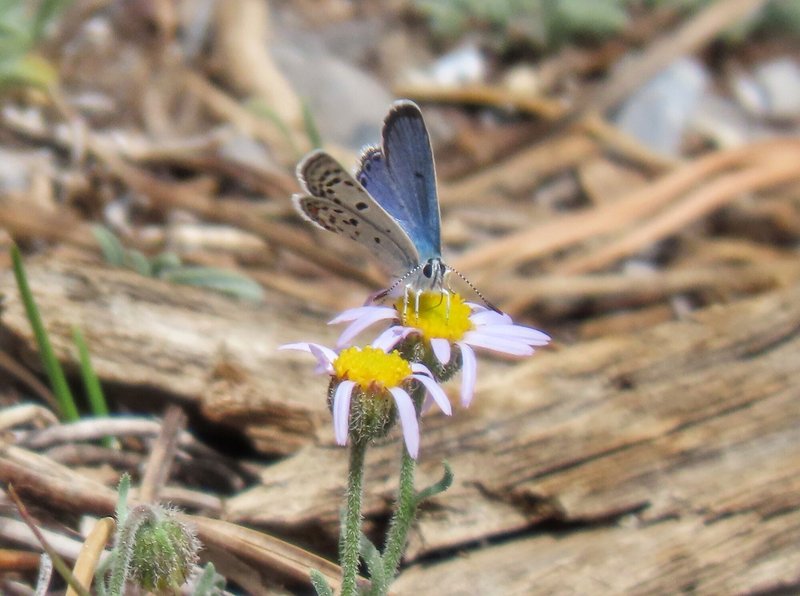
WASHINGTON— Sen. Richard Blumenthal (D-Conn.) and Rep. Adelita Grijalva (D-Ariz.) have introduced the Extinction Prevention Act of 2026, which would provide $20 million per year to fund crucial conservation work to recover the most endangered groups of wildlife in the United States.
The legislation would establish four grant programs that each provide $5 million per year. These targeted funds would be used for emergency on-the-ground conservation to stabilize and save four groups of endangered species at greatest risk of extinction: North American butterflies, freshwater mussels, desert fish and Hawaiian plants.
“Too many of America’s most endangered animals and plants have been neglected for so long that they’re now hanging on by a thread, so this bill is urgently needed,” said Stephanie Kurose, deputy director of government affairs at the Center for Biological Diversity. “While the Orangefoot pimpleback mussel and humpback chub may have funny names, losing these remarkable species forever would be no joke. The Extinction Prevention Act recognizes that every species matters and that extinction should never be the price of political inaction.”
Hundreds of endangered species receive less than $1,000 a year for their recovery, with many receiving no funding from the U.S. Fish and Wildlife Service at all. The Extinction Prevention Act would support programs like the Hawaiian Plant Extinction Prevention Program, which works to save more than 237 endangered plant species, each of which has fewer than 50 plants remaining in the wild. Since the program’s inception in 2003, no Hawaiian plants have gone extinct. The Trump administration gutted nearly all funding for this program.
The bill’s introduction comes on Endangered Species Day, an occasion that brings thousands of people from around the world to celebrate, learn about and take action to protect threatened and endangered species.
Background
North American butterflies
Of all the endangered species in the United States, butterflies are one of the fastest-declining groups, with several species on the verge of extinction. The Mount Charleston blue butterfly, Miami blue butterfly and Lange’s metalmark, for example, all have worldwide populations of fewer than 100 individuals. These and other species would benefit from captive propagation and habitat restoration well beyond what is currently occurring.
Southeast freshwater mussels
North America has the highest diversity of freshwater mussels in the world, but unfortunately much of this diversity is threatened. Freshwater mussels are the most endangered group of organisms in the United States; 70% are at risk of extinction and 38 species have already been lost.
Southwest desert fish
The Southwest’s unique fish — found nowhere else on Earth — have been decimated by a century of habitat degradation and non-native fish introductions. More than 45 desert fish species are either endangered or threatened, and most have experienced drastic reductions in abundance and range.
Hawaiian plants
Hawai‘i has more endangered species than any other state, including more than 400 plants that make up one-quarter of all species protected under the Endangered Species Act. Many of these plants are barely hanging on in remote, difficult-to-reach cliffs and ravines where they are safe from human development and non-native species. This funding would help support programs like the Hawaiian Plant Extinction Prevention Program.