RENO, Nev.— Environmental and Indigenous rights groups today appealed a federal court ruling that upheld approvals for the Rhyolite Ridge Lithium Mine in Nevada. The groups asked the 9th U.S. Circuit Court of Appeals to overturn the decision.
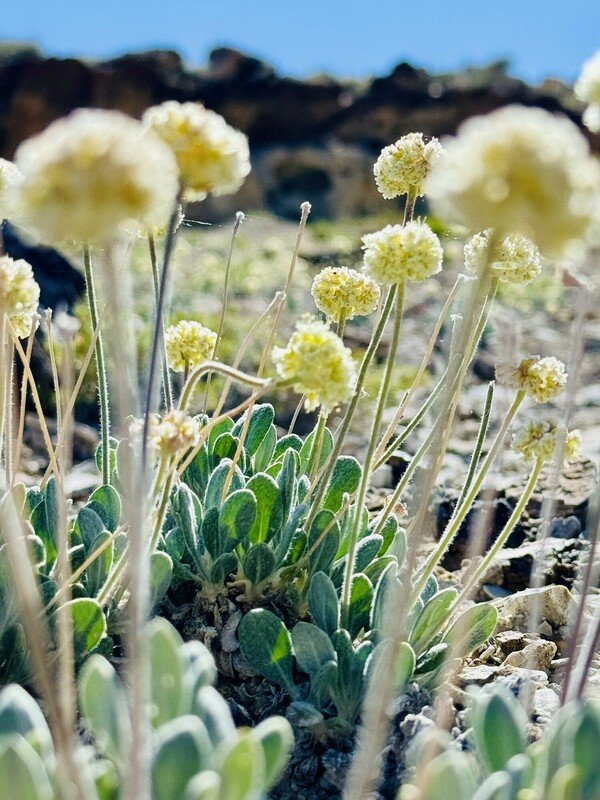
Numerous studies have determined that the proposed mine would drive the rare wildflower Tiehm’s buckwheat to extinction.
“The federal government’s approvals for this mine were flawed from the start. We’re hopeful the appeals court will step in to block this mine before irreversible damage is done,” said Patrick Donnelly, Great Basin director at the Center for Biological Diversity. “We’ve been fighting for Tiehm’s buckwheat for eight years and we’re not stopping now.”
The mine plan calls for a 1,000-foot-deep open pit, surrounded by 2 square miles of waste rock dumps and a sulfuric acid processing plant. Hundreds of daily truck trips would transform a pristine area — home to bighorn sheep, golden eagles and hundreds of plant species — into an industrial zone.
The mine would severely and irreversibly harm or destroy sites sacred to the Western Shoshone people. Cave Spring, less than a mile from the proposed pit, has been described by the Western Shoshone Defense Project as “a site of intergenerational transmission of cultural and spiritual knowledge.” It is among dozens of nearby springs that could go dry as the mine pumps hundreds of millions of gallons of groundwater each year.
“Rhyolite Ridge is much more than one can see with the naked eye. Appreciation and relationship to the land comes from the heart,” said Fermina Stevens, director of the Western Shoshone Defense Project. “The connection and love we have for the land is derived through generations of ceremony, tradition and cultural sharing. Each day we face another scheme that undermines protections that took years to achieve. All of that work is destroyed with a stroke of a pen by greed that has no connection to culture or love for anything other than self. The Western Shoshone Defense Project will defend and protect our future on the ground and in the court system. Our love for the land has no boundaries.”
The Bureau of Land Management approved the project in October 2024, and the U.S. Fish and Wildlife Service concluded that the project would pose no risk to Tiehm’s buckwheat. The groups appealing today filed a lawsuit within one week of the mine’s approval.
In addition to pushing Tiehm’s buckwheat toward extinction, the mine would degrade groundwater quality and consume billions of gallons of clean water annually. Groundwater pumping for the project would lower aquifer levels in nearby Fish Lake Valley, which supports a diverse wetland ecosystem.
“Large mines such as the proposed Rhyolite Ridge Mine are very damaging and effectively obliterate existing habitat,” said John Hadder, executive director of Great Basin Resource Watch. “We must be careful and judicious when permitting these projects. Biodiversity lies at the heart of the natural ecosystems on which humans depend. Especially given the current global biodiversity loss crisis, it is dangerous to allow the Rhyolite Ridge Mine to proceed. As a society, we risk shooting ourselves in the foot by accepting this avoidable loss of precious biodiversity.”