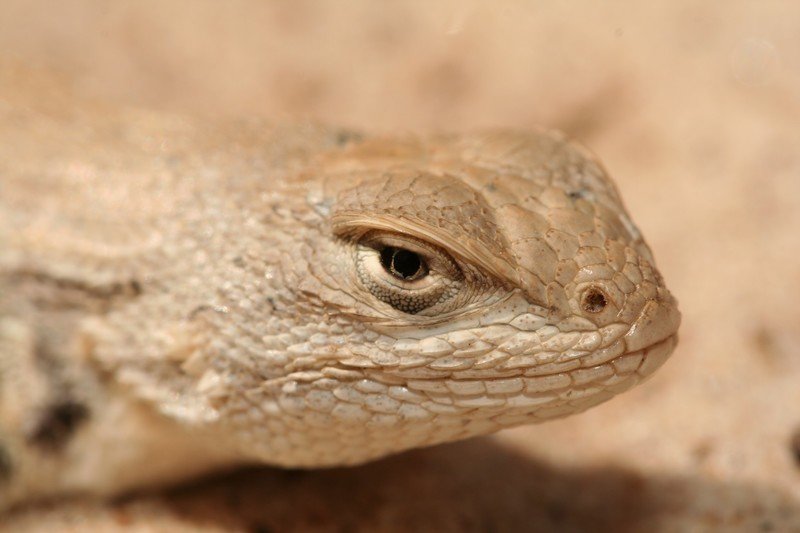
MIDLAND, Texas— The Center for Biological Diversity today appealed a federal court’s decision that allowed the Trump administration and the state of Texas to strip dunes sagebrush lizards of their federal Endangered Species Act protections.
“We’re tired of the Trump administration putting politics and polluters over science at the expense of struggling wildlife like dunes sagebrush lizards,” said Jason Rylander, a senior attorney at the Center. “These lizards are clearly endangered and need federal protection to survive, so we’re appealing to prevent their extinction. We need to make sure the federal government follows the law and does its job or these critters won’t have a fighting chance.”
The district court’s action reflects a pattern in which the Trump administration settles cases challenging the final rules that provide critical protections for species, rather than defending the government’s own decisions to protect those imperiled plants and animals. At the government’s request, this Texas court previously struck down the listing of the lesser prairie chicken. Another federal court in the Northern District of Texas is currently considering a motion to remove protections for a group of central Texas mussel species.
In May 2024 the U.S. Fish and Wildlife Service designated the dunes sagebrush lizard as endangered after four decades of delay. But in June, rather than defend its own work, the Service claimed that it made an “error” when it listed the lizard and asked the U.S. District Court in the Western District of Texas to strip the listing from the books. In July, with no meaningful examination of the government’s claims, U.S. District Judge David Counts approved the stipulated settlement agreement.
The Center sought to intervene in this case in March 2025 but was denied on the grounds that the government would defend the listing and provide adequate representation. The Center’s appeal of that intervention denial is pending in the Fifth U.S. Circuit Court of Appeals.
“I hope the appeals court will see through this charade perpetrated on behalf of Texas politicians and oil and gas polluters and order the court to restore the dunes sagebrush lizard’s listing,” said Rylander. “We’ve got to expose these backroom deals that strip imperiled species of lifesaving protections. The Fish and Wildlife Service didn’t make a mistake when it listed the lizard. The mistake was trusting the Trump administration to do the right thing.”
Background
Originally identified as a candidate for Endangered Species Act protections in 1982, dunes sagebrush lizards waited more than 40 years for federal protections. The Center petitioned to place the lizard on the endangered species list in 2002. Prompted by the Center’s follow-up litigation, the Fish and Wildlife Service proposed to protect the lizard in 2010.
However, the agency denied the lizards protection after the Texas Comptroller’s Office developed a non-binding conservation agreement that purported to safeguard some of their habitat. When the state rescinded that plan in 2018, the Center again petitioned for protection but it took another lawsuit in 2022 to achieve final protections.
The lizards live in a tiny area of West Texas and southeastern New Mexico that includes part of the Permian Basin, which over the last decade has been one of world’s fastest-growing oil and gas fields. The 2.5-inch-long animal has the second smallest range of any lizard in North America, inhabiting a rare ecosystem where it hunts insects and spiders in wind-blown dunes. They burrow into the sand beneath low-lying shinnery oak shrubs for protection from extreme temperatures.
More than 95% of the original shinnery oak dunes ecosystem has been destroyed by oil and gas extraction and other development, as well as herbicide spraying to support livestock grazing. Much of the lizards’ remaining habitat is fragmented, preventing them from finding mates beyond those already living close by.
The lizards are further imperiled by burgeoning sand mining operations in the area — a secondary impact of the oil and gas industry, which uses the sand for fracking.